
Retirement Redefined
Achieve Financial Freedom and
A Better Work/Life Balance
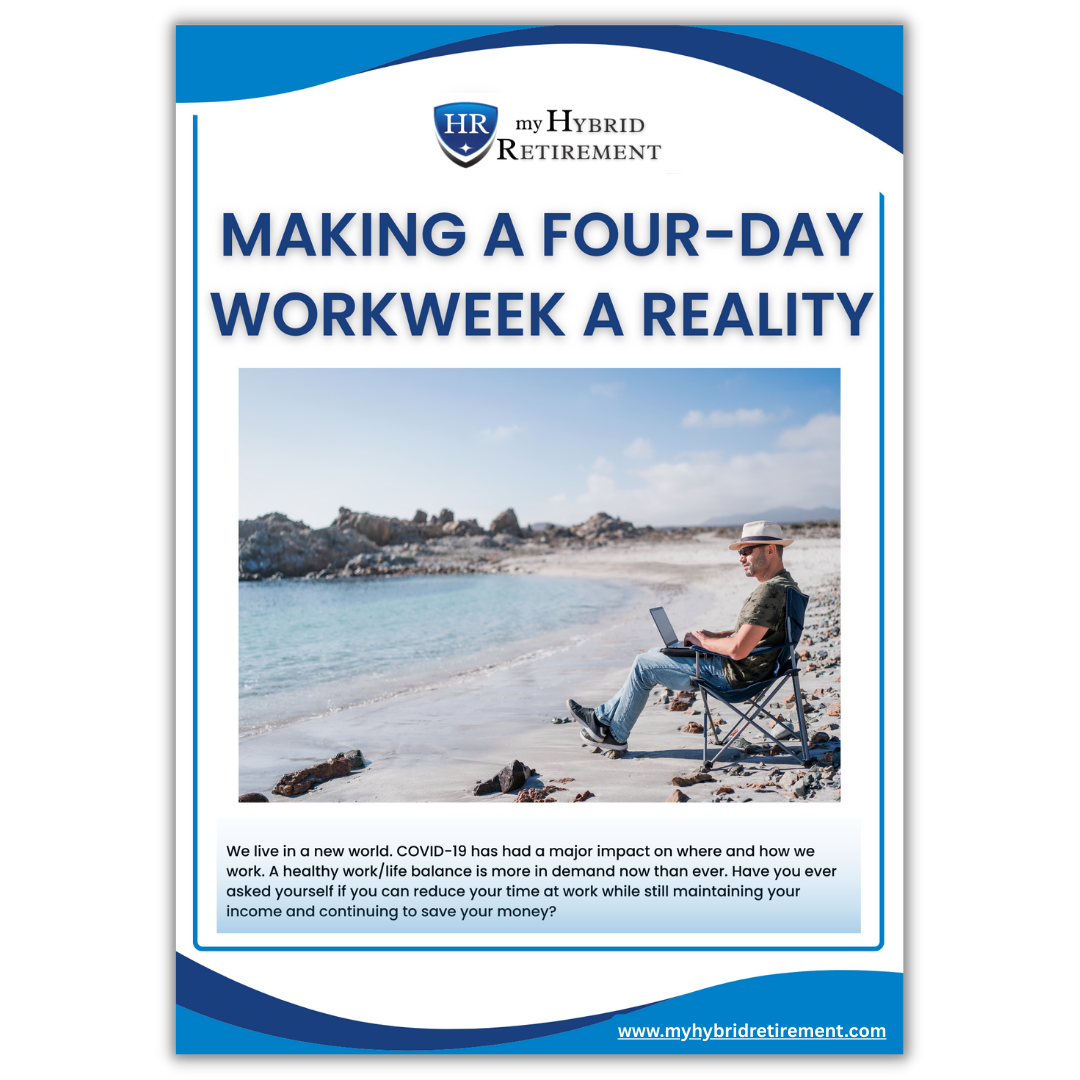
Here's what I can offer :
Clarity:
A clear path to financial freedom tailored for you.
Work/life balance strategies:
Create more time for family, travel, and personal passions.
Confidence:
The tools to make informed financial decisions with ease.
Efficiency:
Simplified, actionable steps to build wealth without unnecessary complexity.
Freedom:
A roadmap to design a life aligned with your goals and values.
On-demand Learning
Educational webcasts that inspire smarter choices.


Masterclasses
Strategies to preserve wealth, navigate taxes, and retire on your terms.



The $1M Question: Is It Really Enough to Retire in Today’s Market?
The $1M Question: Is It Really Enough to Retire in Today’s Market?
Let’s Be Honest — That Number Feels Smaller Every Year
Remember when a million dollars felt like the ultimate finish line?
You’d picture yourself finally free—no more early Monday morning calls, no more quarterly reviews, no more airport lounges at 5 am. Just time, freedom, and the life you spent decades building toward. A million bucks. That was the dream.
Well, here’s something nobody’s telling you clearly enough: that dream might be built on a number that no longer does what you think it does.
And if you’re in your 50s or 60s — if retirement isn’t some distant concept but something you’re actively planning for right now — this is the conversation you need to have. Not someday. Today.
Why This Isn’t Just a Math Problem
Here’s the thing. Most retirement articles will throw formulas at you. They’ll talk about withdrawal rates, portfolio allocations, and Monte Carlo simulations. And while all of that matters, it misses the real question, which isn’t "How much do I have? ”It's "Will this actually be enough for the life I want to live, for as long as I need it to last? ”
That’s a very different question. And for business professionals who’ve spent their careers making smart, high-stakes decisions, it deserves a real, straight answer.
So let’s get into it.
What Does $1 Million Actually Buy You in Retirement?
Start with the basics. The most widely referenced guideline in retirement planning is the 4% rule — the idea that if you withdraw 4% of your savings each year, your money should last roughly 30 years.
Here’s what that looks like on $1 million:
• Annual withdrawal: $40,000
• Monthly income: approximately $3,333 — before taxes
Now sit with that for a moment. Is $3,333 a month the retirement you’ve been working toward? For most senior professionals who’ve spent years earning six figures and building a lifestyle to match, that number doesn’t feel like freedom. It feels like a budget. And that’s before the real trouble starts.
The Four Forces Working Against Your Million
There are four powerful forces quietly eroding the value of your nest egg — and most retirement calculators don’t fully account for all of them at once.
1. Inflation: The Slow Drain Nobody Talks About Enough
At just 3% annual inflation — which is actually on the conservative side given recent years — the $40,000 you withdraw today has the purchasing power of roughly $22,000 in twenty years. You’re pulling the same dollar amount out of your account, but buying less and less with it every single year.
2. Healthcare: The Budget-Buster Hidden in the Fine Print
Here’s a number that’ll make you pause — the average retired couple spends somewhere between $300,000 and $350,000 on healthcare throughout retirement. That’s not including long-term care. And if you’re retiring before 65 and not yet eligible for Medicare? You’re covering private insurance out of pocket, which can easily run $1,500 to $2,000 a month for a couple.
That alone can take a serious bite out of your million in the early years.
3. Sequence of Returns Risk: Timing Is Everything
This is the one that trips up even sophisticated investors. If the market takes a significant hit right when you begin withdrawing — in those first critical five years — you’re forced to sell assets at a loss to fund your lifestyle. Even when the market recovers later, your portfolio never fully gets back what it lost. The damage is permanent.
You can’t control market timing. But you absolutely can plan around it.
4. Longevity: Living Long Is Wonderful — and Expensive
People are living longer than ever. And that’s genuinely great news. But financially, it means your money needs to stretch further than any previous generation had to account for. Retire at 62 and live to 92? That’s thirty years of living expenses, healthcare, inflation, and lifestyle costs—all coming out of the same pool of money.
A million dollars spread across thirty real years of life gets thin. Fast.
WATCH BEFORE YOU READ FURTHER
Before we get into the strategies, I want you to see the full picture.
I’ve created a documentary that goes deep on the hybrid retirement model—the exact approach that’s helping business professionals like you bridge the gap between where they are and where they want to be.
▶ Click Here to Watch the Documentary on YouTube
Watch it. Then come back. The strategies below will hit a lot harder once you’ve seen the full context.
Is $1 Million Actually Enough? Here’s the Honest Answer
It depends — but not in a wishy-washy, non-committal way. It depends on five very specific things that are unique to your situation. Work through each one honestly.
1. What do I actually want to spend each month in retirement? Not what you think you should spend, but what you genuinely want. Travel, dining out, hobbies, supporting family, giving to causes you care about. Be real with yourself here.
2. What will Social Security realistically provide? The average benefit sits around $1,700 a month, but your number could be significantly higher depending on your earnings history. And here’s what most people get wrong—when you claim matters enormously. Waiting until 70 instead of claiming at 62 can increase your monthly benefit by up to 77%.
3. Do you have other income streams? A pension, rental income, dividends, or part-time consulting — any of these changes the calculation dramatically. A million dollars working as a supplement to other income is a completely different situation from a million dollars as your only source.
4. Where are you planning to live? Retiring in coastal California is a fundamentally different financial proposition from retiring in middle Tennessee. Geographic flexibility is one of the most underused levers in retirement planning.
5. What does your health picture honestly look like? Family history, current health, and the realistic likelihood of needing long-term care all belong in this calculation. It’s an uncomfortable question—but a necessary one.
What a Genuinely Comfortable Retirement Actually Costs
Financial planners who work with senior professionals consistently put the real target for a comfortable, stress-free retirement in the range of $2 million to $3 million—depending on lifestyle, location, and health needs.
Now—before that number creates panic—take a breath. Because there are real, proven strategies that can make your existing savings work significantly harder, stretch further, and still fund a life you’re genuinely excited about. Let’s walk through them.
Five Strategies That Actually Move the Needle
Strategy 1: Delay Social Security — Even by a Year or Two
Every year you delay claiming Social Security past your full retirement age, your monthly benefit grows by approximately 8%. That’s a guaranteed, inflation-adjusted return that no investment can reliably promise. If you can bridge the financial gap—even partially—delaying retirement to 70 is often one of the highest-return decisions available to anyone approaching retirement.
Strategy 2: Build a Three-Bucket Strategy
Stop thinking of your retirement savings as one big pool of money. Divide it into three distinct buckets—each with a different job:
• Bucket 1 (Years 0–3): Cash or near-cash equivalents. No market exposure. These funds cover your immediate living expenses and completely remove the risk of having to sell investments at a loss during a market downturn.
• Bucket 2 (Years 3–10): Conservative investments — bonds, dividend-paying stocks, balanced funds. This grows steadily while Bucket 1 is being drawn down.
• Bucket 3 (Years 10+): Growth-oriented investments. This bucket has time on its side, which means it can weather market volatility and recover from downturns without affecting your lifestyle.
Strategy 3: Consider a Phased Retirement
Who says retirement has to be a hard stop on a Friday afternoon? More and more senior professionals are transitioning into consulting roles, board advisory positions, or part-time work in their field. Even generating $2,000 to $3,000 a month in part-time income dramatically reduces the withdrawal pressure on your portfolio. And as a bonus, staying mentally active and engaged has real, documented longevity benefits too.
Strategy 4: Unlock Your Home Equity
Your home might be the most underutilized financial asset you own. Downsizing, relocating to a more affordable area, or strategically using a reverse mortgage can unlock decades of built-up equity. Don’t overlook this lever just because it feels uncomfortable to think about.
Strategy 5: Get Ruthlessly Serious About Tax Planning
Where your money lives matters just as much as how much you have. A million dollars in a traditional 401(k) is fundamentally different from a million dollars in a Roth IRA—one generates a tax bill on every single withdrawal, the other doesn’t. Strategic Roth conversions in your early retirement years — when your income may temporarily be lower — can save you tens of thousands of dollars over the course of retirement.
Frequently Asked Questions
Is $1 million enough to retire at 60?
For most professionals used to a comfortable lifestyle, $1 million at 60 is on the lean side—especially with potentially 30 or more years of retirement ahead. It can absolutely work with the right strategy, disciplined withdrawals, and supplemental income sources. But there’s not much room for error, and planning precision matters enormously.
What if I have a pension on top of $1 million?
That changes the picture significantly. A pension generating $2,000 to $3,000 a month means you’re using your savings as a cushion and a supplement rather than a sole income source. In that scenario, $1 million becomes genuinely comfortable for most people.
Should I be worried about running out of money?
It’s a legitimate concern — not a paranoid one. The best protection is a plan that’s built around your specific numbers, not generic rules of thumb. Know your monthly needs, diversify your income sources, and review your plan at least annually.
Does the 4% rule still hold up today?
Many financial experts now recommend a more conservative 3% to 3.5% withdrawal rate, given longer life expectancies and today’s market environment. Think of the 4% rule as a starting point for a conversation—not a guarantee.
What’s the single most important thing I can do right now?
Get crystal clear on your actual monthly retirement income picture — how much you’ll need, where it’ll come from, and how long it has to last. Build your strategy around that reality, not someone else’s generic formula. And if you’re not sure where to start, that’s exactly what I’m here for.
A Million Dollars Is a Milestone — Not a Plan
Here’s the truth I want you to walk away with: a million dollars is an impressive milestone. It is not, by itself, a retirement plan.
Whether it’s enough depends entirely on your life — your health, your goals, your income streams, your location, and most importantly, your strategy. The professionals I’ve seen retire with the most confidence and the least anxiety aren’t always the ones who saved the most. They’re the ones who planned the most deliberately. They knew their numbers cold. They built multiple income streams. They made intentional decisions about timing, taxes, and lifestyle.
The good news? If you’re in your 50s or 60s, you very likely still have time to optimize, adjust, and build something more resilient. But the window isn’t infinite. And the best time to get serious is right now.
WANT TO GO DEEPER?
If this article got you thinking — if you’re ready to stop guessing and start building a retirement strategy that’s actually designed around your life — there’s a lot more waiting for you.
My Hybrid Retirement is built specifically for business professionals like you who want a smarter, more flexible path to financial freedom—one that doesn’t force you to choose between living well now and living well later.
→ Visit MyHybridRetirement.com to Learn More
READY TO BUILD YOUR PERSONAL RETIREMENT PLAN?
If you’ve read this far, you’re serious. And serious deserves more than a blog post.
Book a free 15-minute call with me and let’s look at your specific numbers together. No pressure, no sales pitch — just a straight, honest conversation about where you are and what your best next move looks like.
Click Here to Book Your Free 15-Minute Call
Spots are limited. Book yours today.
Your Challenge for This Week
Here’s what I’d like you to do before the week is out: pick ONE strategy from this article and take one concrete action on it. Just one.
Maybe that’s finally sitting down to calculate your real monthly retirement budget. Maybe it’s pulling up your Social Security statement and running your claim scenarios. Maybe it’s having an honest conversation with your partner about what you both actually want retirement to look like.
Whatever it is—do it this week.
Then come back and tell me
Which strategy are you putting into action first? What did you discover when you sat down with your numbers? Drop it in the comments below—I read every single one, and your experience might be exactly what someone else reading this needs to hear.
Because at the end of the day, the real $1 million question isn’t just about money. It’s about whether you’ve built the life you actually want to live and whether your plan is strong enough to protect it.
myhybridretirement.com | Watch the Documentary | Book a Free Call
Smart retirement strategies for business professionals in their 50s and 60s.

The $1M Question: Is It Really Enough to Retire in Today’s Market?
The $1M Question: Is It Really Enough to Retire in Today’s Market?
Let’s Be Honest — That Number Feels Smaller Every Year
Remember when a million dollars felt like the ultimate finish line?
You’d picture yourself finally free—no more early Monday morning calls, no more quarterly reviews, no more airport lounges at 5 am. Just time, freedom, and the life you spent decades building toward. A million bucks. That was the dream.
Well, here’s something nobody’s telling you clearly enough: that dream might be built on a number that no longer does what you think it does.
And if you’re in your 50s or 60s — if retirement isn’t some distant concept but something you’re actively planning for right now — this is the conversation you need to have. Not someday. Today.
Why This Isn’t Just a Math Problem
Here’s the thing. Most retirement articles will throw formulas at you. They’ll talk about withdrawal rates, portfolio allocations, and Monte Carlo simulations. And while all of that matters, it misses the real question, which isn’t "How much do I have? ”It's "Will this actually be enough for the life I want to live, for as long as I need it to last? ”
That’s a very different question. And for business professionals who’ve spent their careers making smart, high-stakes decisions, it deserves a real, straight answer.
So let’s get into it.
What Does $1 Million Actually Buy You in Retirement?
Start with the basics. The most widely referenced guideline in retirement planning is the 4% rule — the idea that if you withdraw 4% of your savings each year, your money should last roughly 30 years.
Here’s what that looks like on $1 million:
• Annual withdrawal: $40,000
• Monthly income: approximately $3,333 — before taxes
Now sit with that for a moment. Is $3,333 a month the retirement you’ve been working toward? For most senior professionals who’ve spent years earning six figures and building a lifestyle to match, that number doesn’t feel like freedom. It feels like a budget. And that’s before the real trouble starts.
The Four Forces Working Against Your Million
There are four powerful forces quietly eroding the value of your nest egg — and most retirement calculators don’t fully account for all of them at once.
1. Inflation: The Slow Drain Nobody Talks About Enough
At just 3% annual inflation — which is actually on the conservative side given recent years — the $40,000 you withdraw today has the purchasing power of roughly $22,000 in twenty years. You’re pulling the same dollar amount out of your account, but buying less and less with it every single year.
2. Healthcare: The Budget-Buster Hidden in the Fine Print
Here’s a number that’ll make you pause — the average retired couple spends somewhere between $300,000 and $350,000 on healthcare throughout retirement. That’s not including long-term care. And if you’re retiring before 65 and not yet eligible for Medicare? You’re covering private insurance out of pocket, which can easily run $1,500 to $2,000 a month for a couple.
That alone can take a serious bite out of your million in the early years.
3. Sequence of Returns Risk: Timing Is Everything
This is the one that trips up even sophisticated investors. If the market takes a significant hit right when you begin withdrawing — in those first critical five years — you’re forced to sell assets at a loss to fund your lifestyle. Even when the market recovers later, your portfolio never fully gets back what it lost. The damage is permanent.
You can’t control market timing. But you absolutely can plan around it.
4. Longevity: Living Long Is Wonderful — and Expensive
People are living longer than ever. And that’s genuinely great news. But financially, it means your money needs to stretch further than any previous generation had to account for. Retire at 62 and live to 92? That’s thirty years of living expenses, healthcare, inflation, and lifestyle costs—all coming out of the same pool of money.
A million dollars spread across thirty real years of life gets thin. Fast.
WATCH BEFORE YOU READ FURTHER
Before we get into the strategies, I want you to see the full picture.
I’ve created a documentary that goes deep on the hybrid retirement model—the exact approach that’s helping business professionals like you bridge the gap between where they are and where they want to be.
▶ Click Here to Watch the Documentary on YouTube
Watch it. Then come back. The strategies below will hit a lot harder once you’ve seen the full context.
Is $1 Million Actually Enough? Here’s the Honest Answer
It depends — but not in a wishy-washy, non-committal way. It depends on five very specific things that are unique to your situation. Work through each one honestly.
1. What do I actually want to spend each month in retirement? Not what you think you should spend, but what you genuinely want. Travel, dining out, hobbies, supporting family, giving to causes you care about. Be real with yourself here.
2. What will Social Security realistically provide? The average benefit sits around $1,700 a month, but your number could be significantly higher depending on your earnings history. And here’s what most people get wrong—when you claim matters enormously. Waiting until 70 instead of claiming at 62 can increase your monthly benefit by up to 77%.
3. Do you have other income streams? A pension, rental income, dividends, or part-time consulting — any of these changes the calculation dramatically. A million dollars working as a supplement to other income is a completely different situation from a million dollars as your only source.
4. Where are you planning to live? Retiring in coastal California is a fundamentally different financial proposition from retiring in middle Tennessee. Geographic flexibility is one of the most underused levers in retirement planning.
5. What does your health picture honestly look like? Family history, current health, and the realistic likelihood of needing long-term care all belong in this calculation. It’s an uncomfortable question—but a necessary one.
What a Genuinely Comfortable Retirement Actually Costs
Financial planners who work with senior professionals consistently put the real target for a comfortable, stress-free retirement in the range of $2 million to $3 million—depending on lifestyle, location, and health needs.
Now—before that number creates panic—take a breath. Because there are real, proven strategies that can make your existing savings work significantly harder, stretch further, and still fund a life you’re genuinely excited about. Let’s walk through them.
Five Strategies That Actually Move the Needle
Strategy 1: Delay Social Security — Even by a Year or Two
Every year you delay claiming Social Security past your full retirement age, your monthly benefit grows by approximately 8%. That’s a guaranteed, inflation-adjusted return that no investment can reliably promise. If you can bridge the financial gap—even partially—delaying retirement to 70 is often one of the highest-return decisions available to anyone approaching retirement.
Strategy 2: Build a Three-Bucket Strategy
Stop thinking of your retirement savings as one big pool of money. Divide it into three distinct buckets—each with a different job:
• Bucket 1 (Years 0–3): Cash or near-cash equivalents. No market exposure. These funds cover your immediate living expenses and completely remove the risk of having to sell investments at a loss during a market downturn.
• Bucket 2 (Years 3–10): Conservative investments — bonds, dividend-paying stocks, balanced funds. This grows steadily while Bucket 1 is being drawn down.
• Bucket 3 (Years 10+): Growth-oriented investments. This bucket has time on its side, which means it can weather market volatility and recover from downturns without affecting your lifestyle.
Strategy 3: Consider a Phased Retirement
Who says retirement has to be a hard stop on a Friday afternoon? More and more senior professionals are transitioning into consulting roles, board advisory positions, or part-time work in their field. Even generating $2,000 to $3,000 a month in part-time income dramatically reduces the withdrawal pressure on your portfolio. And as a bonus, staying mentally active and engaged has real, documented longevity benefits too.
Strategy 4: Unlock Your Home Equity
Your home might be the most underutilized financial asset you own. Downsizing, relocating to a more affordable area, or strategically using a reverse mortgage can unlock decades of built-up equity. Don’t overlook this lever just because it feels uncomfortable to think about.
Strategy 5: Get Ruthlessly Serious About Tax Planning
Where your money lives matters just as much as how much you have. A million dollars in a traditional 401(k) is fundamentally different from a million dollars in a Roth IRA—one generates a tax bill on every single withdrawal, the other doesn’t. Strategic Roth conversions in your early retirement years — when your income may temporarily be lower — can save you tens of thousands of dollars over the course of retirement.
Frequently Asked Questions
Is $1 million enough to retire at 60?
For most professionals used to a comfortable lifestyle, $1 million at 60 is on the lean side—especially with potentially 30 or more years of retirement ahead. It can absolutely work with the right strategy, disciplined withdrawals, and supplemental income sources. But there’s not much room for error, and planning precision matters enormously.
What if I have a pension on top of $1 million?
That changes the picture significantly. A pension generating $2,000 to $3,000 a month means you’re using your savings as a cushion and a supplement rather than a sole income source. In that scenario, $1 million becomes genuinely comfortable for most people.
Should I be worried about running out of money?
It’s a legitimate concern — not a paranoid one. The best protection is a plan that’s built around your specific numbers, not generic rules of thumb. Know your monthly needs, diversify your income sources, and review your plan at least annually.
Does the 4% rule still hold up today?
Many financial experts now recommend a more conservative 3% to 3.5% withdrawal rate, given longer life expectancies and today’s market environment. Think of the 4% rule as a starting point for a conversation—not a guarantee.
What’s the single most important thing I can do right now?
Get crystal clear on your actual monthly retirement income picture — how much you’ll need, where it’ll come from, and how long it has to last. Build your strategy around that reality, not someone else’s generic formula. And if you’re not sure where to start, that’s exactly what I’m here for.
A Million Dollars Is a Milestone — Not a Plan
Here’s the truth I want you to walk away with: a million dollars is an impressive milestone. It is not, by itself, a retirement plan.
Whether it’s enough depends entirely on your life — your health, your goals, your income streams, your location, and most importantly, your strategy. The professionals I’ve seen retire with the most confidence and the least anxiety aren’t always the ones who saved the most. They’re the ones who planned the most deliberately. They knew their numbers cold. They built multiple income streams. They made intentional decisions about timing, taxes, and lifestyle.
The good news? If you’re in your 50s or 60s, you very likely still have time to optimize, adjust, and build something more resilient. But the window isn’t infinite. And the best time to get serious is right now.
WANT TO GO DEEPER?
If this article got you thinking — if you’re ready to stop guessing and start building a retirement strategy that’s actually designed around your life — there’s a lot more waiting for you.
My Hybrid Retirement is built specifically for business professionals like you who want a smarter, more flexible path to financial freedom—one that doesn’t force you to choose between living well now and living well later.
→ Visit MyHybridRetirement.com to Learn More
READY TO BUILD YOUR PERSONAL RETIREMENT PLAN?
If you’ve read this far, you’re serious. And serious deserves more than a blog post.
Book a free 15-minute call with me and let’s look at your specific numbers together. No pressure, no sales pitch — just a straight, honest conversation about where you are and what your best next move looks like.
Click Here to Book Your Free 15-Minute Call
Spots are limited. Book yours today.
Your Challenge for This Week
Here’s what I’d like you to do before the week is out: pick ONE strategy from this article and take one concrete action on it. Just one.
Maybe that’s finally sitting down to calculate your real monthly retirement budget. Maybe it’s pulling up your Social Security statement and running your claim scenarios. Maybe it’s having an honest conversation with your partner about what you both actually want retirement to look like.
Whatever it is—do it this week.
Then come back and tell me
Which strategy are you putting into action first? What did you discover when you sat down with your numbers? Drop it in the comments below—I read every single one, and your experience might be exactly what someone else reading this needs to hear.
Because at the end of the day, the real $1 million question isn’t just about money. It’s about whether you’ve built the life you actually want to live and whether your plan is strong enough to protect it.
myhybridretirement.com | Watch the Documentary | Book a Free Call
Smart retirement strategies for business professionals in their 50s and 60s.
The $1M Question: Is It Really Enough to Retire in Today’s Market?
The $1M Question: Is It Really Enough to Retire in Today’s Market?
Let’s Be Honest — That Number Feels Smaller Every Year
Remember when a million dollars felt like the ultimate finish line?
You’d picture yourself finally free—no more early Monday morning calls, no more quarterly reviews, no more airport lounges at 5 am. Just time, freedom, and the life you spent decades building toward. A million bucks. That was the dream.
Well, here’s something nobody’s telling you clearly enough: that dream might be built on a number that no longer does what you think it does.
And if you’re in your 50s or 60s — if retirement isn’t some distant concept but something you’re actively planning for right now — this is the conversation you need to have. Not someday. Today.
Why This Isn’t Just a Math Problem
Here’s the thing. Most retirement articles will throw formulas at you. They’ll talk about withdrawal rates, portfolio allocations, and Monte Carlo simulations. And while all of that matters, it misses the real question, which isn’t "How much do I have? ”It's "Will this actually be enough for the life I want to live, for as long as I need it to last? ”
That’s a very different question. And for business professionals who’ve spent their careers making smart, high-stakes decisions, it deserves a real, straight answer.
So let’s get into it.
What Does $1 Million Actually Buy You in Retirement?
Start with the basics. The most widely referenced guideline in retirement planning is the 4% rule — the idea that if you withdraw 4% of your savings each year, your money should last roughly 30 years.
Here’s what that looks like on $1 million:
• Annual withdrawal: $40,000
• Monthly income: approximately $3,333 — before taxes
Now sit with that for a moment. Is $3,333 a month the retirement you’ve been working toward? For most senior professionals who’ve spent years earning six figures and building a lifestyle to match, that number doesn’t feel like freedom. It feels like a budget. And that’s before the real trouble starts.
The Four Forces Working Against Your Million
There are four powerful forces quietly eroding the value of your nest egg — and most retirement calculators don’t fully account for all of them at once.
1. Inflation: The Slow Drain Nobody Talks About Enough
At just 3% annual inflation — which is actually on the conservative side given recent years — the $40,000 you withdraw today has the purchasing power of roughly $22,000 in twenty years. You’re pulling the same dollar amount out of your account, but buying less and less with it every single year.
2. Healthcare: The Budget-Buster Hidden in the Fine Print
Here’s a number that’ll make you pause — the average retired couple spends somewhere between $300,000 and $350,000 on healthcare throughout retirement. That’s not including long-term care. And if you’re retiring before 65 and not yet eligible for Medicare? You’re covering private insurance out of pocket, which can easily run $1,500 to $2,000 a month for a couple.
That alone can take a serious bite out of your million in the early years.
3. Sequence of Returns Risk: Timing Is Everything
This is the one that trips up even sophisticated investors. If the market takes a significant hit right when you begin withdrawing — in those first critical five years — you’re forced to sell assets at a loss to fund your lifestyle. Even when the market recovers later, your portfolio never fully gets back what it lost. The damage is permanent.
You can’t control market timing. But you absolutely can plan around it.
4. Longevity: Living Long Is Wonderful — and Expensive
People are living longer than ever. And that’s genuinely great news. But financially, it means your money needs to stretch further than any previous generation had to account for. Retire at 62 and live to 92? That’s thirty years of living expenses, healthcare, inflation, and lifestyle costs—all coming out of the same pool of money.
A million dollars spread across thirty real years of life gets thin. Fast.
WATCH BEFORE YOU READ FURTHER
Before we get into the strategies, I want you to see the full picture.
I’ve created a documentary that goes deep on the hybrid retirement model—the exact approach that’s helping business professionals like you bridge the gap between where they are and where they want to be.
▶ Click Here to Watch the Documentary on YouTube
Watch it. Then come back. The strategies below will hit a lot harder once you’ve seen the full context.
Is $1 Million Actually Enough? Here’s the Honest Answer
It depends — but not in a wishy-washy, non-committal way. It depends on five very specific things that are unique to your situation. Work through each one honestly.
1. What do I actually want to spend each month in retirement? Not what you think you should spend, but what you genuinely want. Travel, dining out, hobbies, supporting family, giving to causes you care about. Be real with yourself here.
2. What will Social Security realistically provide? The average benefit sits around $1,700 a month, but your number could be significantly higher depending on your earnings history. And here’s what most people get wrong—when you claim matters enormously. Waiting until 70 instead of claiming at 62 can increase your monthly benefit by up to 77%.
3. Do you have other income streams? A pension, rental income, dividends, or part-time consulting — any of these changes the calculation dramatically. A million dollars working as a supplement to other income is a completely different situation from a million dollars as your only source.
4. Where are you planning to live? Retiring in coastal California is a fundamentally different financial proposition from retiring in middle Tennessee. Geographic flexibility is one of the most underused levers in retirement planning.
5. What does your health picture honestly look like? Family history, current health, and the realistic likelihood of needing long-term care all belong in this calculation. It’s an uncomfortable question—but a necessary one.
What a Genuinely Comfortable Retirement Actually Costs
Financial planners who work with senior professionals consistently put the real target for a comfortable, stress-free retirement in the range of $2 million to $3 million—depending on lifestyle, location, and health needs.
Now—before that number creates panic—take a breath. Because there are real, proven strategies that can make your existing savings work significantly harder, stretch further, and still fund a life you’re genuinely excited about. Let’s walk through them.
Five Strategies That Actually Move the Needle
Strategy 1: Delay Social Security — Even by a Year or Two
Every year you delay claiming Social Security past your full retirement age, your monthly benefit grows by approximately 8%. That’s a guaranteed, inflation-adjusted return that no investment can reliably promise. If you can bridge the financial gap—even partially—delaying retirement to 70 is often one of the highest-return decisions available to anyone approaching retirement.
Strategy 2: Build a Three-Bucket Strategy
Stop thinking of your retirement savings as one big pool of money. Divide it into three distinct buckets—each with a different job:
• Bucket 1 (Years 0–3): Cash or near-cash equivalents. No market exposure. These funds cover your immediate living expenses and completely remove the risk of having to sell investments at a loss during a market downturn.
• Bucket 2 (Years 3–10): Conservative investments — bonds, dividend-paying stocks, balanced funds. This grows steadily while Bucket 1 is being drawn down.
• Bucket 3 (Years 10+): Growth-oriented investments. This bucket has time on its side, which means it can weather market volatility and recover from downturns without affecting your lifestyle.
Strategy 3: Consider a Phased Retirement
Who says retirement has to be a hard stop on a Friday afternoon? More and more senior professionals are transitioning into consulting roles, board advisory positions, or part-time work in their field. Even generating $2,000 to $3,000 a month in part-time income dramatically reduces the withdrawal pressure on your portfolio. And as a bonus, staying mentally active and engaged has real, documented longevity benefits too.
Strategy 4: Unlock Your Home Equity
Your home might be the most underutilized financial asset you own. Downsizing, relocating to a more affordable area, or strategically using a reverse mortgage can unlock decades of built-up equity. Don’t overlook this lever just because it feels uncomfortable to think about.
Strategy 5: Get Ruthlessly Serious About Tax Planning
Where your money lives matters just as much as how much you have. A million dollars in a traditional 401(k) is fundamentally different from a million dollars in a Roth IRA—one generates a tax bill on every single withdrawal, the other doesn’t. Strategic Roth conversions in your early retirement years — when your income may temporarily be lower — can save you tens of thousands of dollars over the course of retirement.
Frequently Asked Questions
Is $1 million enough to retire at 60?
For most professionals used to a comfortable lifestyle, $1 million at 60 is on the lean side—especially with potentially 30 or more years of retirement ahead. It can absolutely work with the right strategy, disciplined withdrawals, and supplemental income sources. But there’s not much room for error, and planning precision matters enormously.
What if I have a pension on top of $1 million?
That changes the picture significantly. A pension generating $2,000 to $3,000 a month means you’re using your savings as a cushion and a supplement rather than a sole income source. In that scenario, $1 million becomes genuinely comfortable for most people.
Should I be worried about running out of money?
It’s a legitimate concern — not a paranoid one. The best protection is a plan that’s built around your specific numbers, not generic rules of thumb. Know your monthly needs, diversify your income sources, and review your plan at least annually.
Does the 4% rule still hold up today?
Many financial experts now recommend a more conservative 3% to 3.5% withdrawal rate, given longer life expectancies and today’s market environment. Think of the 4% rule as a starting point for a conversation—not a guarantee.
What’s the single most important thing I can do right now?
Get crystal clear on your actual monthly retirement income picture — how much you’ll need, where it’ll come from, and how long it has to last. Build your strategy around that reality, not someone else’s generic formula. And if you’re not sure where to start, that’s exactly what I’m here for.
A Million Dollars Is a Milestone — Not a Plan
Here’s the truth I want you to walk away with: a million dollars is an impressive milestone. It is not, by itself, a retirement plan.
Whether it’s enough depends entirely on your life — your health, your goals, your income streams, your location, and most importantly, your strategy. The professionals I’ve seen retire with the most confidence and the least anxiety aren’t always the ones who saved the most. They’re the ones who planned the most deliberately. They knew their numbers cold. They built multiple income streams. They made intentional decisions about timing, taxes, and lifestyle.
The good news? If you’re in your 50s or 60s, you very likely still have time to optimize, adjust, and build something more resilient. But the window isn’t infinite. And the best time to get serious is right now.
WANT TO GO DEEPER?
If this article got you thinking — if you’re ready to stop guessing and start building a retirement strategy that’s actually designed around your life — there’s a lot more waiting for you.
My Hybrid Retirement is built specifically for business professionals like you who want a smarter, more flexible path to financial freedom—one that doesn’t force you to choose between living well now and living well later.
→ Visit MyHybridRetirement.com to Learn More
READY TO BUILD YOUR PERSONAL RETIREMENT PLAN?
If you’ve read this far, you’re serious. And serious deserves more than a blog post.
Book a free 15-minute call with me and let’s look at your specific numbers together. No pressure, no sales pitch — just a straight, honest conversation about where you are and what your best next move looks like.
Click Here to Book Your Free 15-Minute Call
Spots are limited. Book yours today.
Your Challenge for This Week
Here’s what I’d like you to do before the week is out: pick ONE strategy from this article and take one concrete action on it. Just one.
Maybe that’s finally sitting down to calculate your real monthly retirement budget. Maybe it’s pulling up your Social Security statement and running your claim scenarios. Maybe it’s having an honest conversation with your partner about what you both actually want retirement to look like.
Whatever it is—do it this week.
Then come back and tell me
Which strategy are you putting into action first? What did you discover when you sat down with your numbers? Drop it in the comments below—I read every single one, and your experience might be exactly what someone else reading this needs to hear.
Because at the end of the day, the real $1 million question isn’t just about money. It’s about whether you’ve built the life you actually want to live and whether your plan is strong enough to protect it.
myhybridretirement.com | Watch the Documentary | Book a Free Call
Smart retirement strategies for business professionals in their 50s and 60s.
The $1M Question: Is It Really Enough to Retire in Today’s Market?
The $1M Question: Is It Really Enough to Retire in Today’s Market?
Let’s Be Honest — That Number Feels Smaller Every Year
Remember when a million dollars felt like the ultimate finish line?
You’d picture yourself finally free—no more early Monday morning calls, no more quarterly reviews, no more airport lounges at 5 am. Just time, freedom, and the life you spent decades building toward. A million bucks. That was the dream.
Well, here’s something nobody’s telling you clearly enough: that dream might be built on a number that no longer does what you think it does.
And if you’re in your 50s or 60s — if retirement isn’t some distant concept but something you’re actively planning for right now — this is the conversation you need to have. Not someday. Today.
Why This Isn’t Just a Math Problem
Here’s the thing. Most retirement articles will throw formulas at you. They’ll talk about withdrawal rates, portfolio allocations, and Monte Carlo simulations. And while all of that matters, it misses the real question, which isn’t "How much do I have? ”It's "Will this actually be enough for the life I want to live, for as long as I need it to last? ”
That’s a very different question. And for business professionals who’ve spent their careers making smart, high-stakes decisions, it deserves a real, straight answer.
So let’s get into it.
What Does $1 Million Actually Buy You in Retirement?
Start with the basics. The most widely referenced guideline in retirement planning is the 4% rule — the idea that if you withdraw 4% of your savings each year, your money should last roughly 30 years.
Here’s what that looks like on $1 million:
• Annual withdrawal: $40,000
• Monthly income: approximately $3,333 — before taxes
Now sit with that for a moment. Is $3,333 a month the retirement you’ve been working toward? For most senior professionals who’ve spent years earning six figures and building a lifestyle to match, that number doesn’t feel like freedom. It feels like a budget. And that’s before the real trouble starts.
The Four Forces Working Against Your Million
There are four powerful forces quietly eroding the value of your nest egg — and most retirement calculators don’t fully account for all of them at once.
1. Inflation: The Slow Drain Nobody Talks About Enough
At just 3% annual inflation — which is actually on the conservative side given recent years — the $40,000 you withdraw today has the purchasing power of roughly $22,000 in twenty years. You’re pulling the same dollar amount out of your account, but buying less and less with it every single year.
2. Healthcare: The Budget-Buster Hidden in the Fine Print
Here’s a number that’ll make you pause — the average retired couple spends somewhere between $300,000 and $350,000 on healthcare throughout retirement. That’s not including long-term care. And if you’re retiring before 65 and not yet eligible for Medicare? You’re covering private insurance out of pocket, which can easily run $1,500 to $2,000 a month for a couple.
That alone can take a serious bite out of your million in the early years.
3. Sequence of Returns Risk: Timing Is Everything
This is the one that trips up even sophisticated investors. If the market takes a significant hit right when you begin withdrawing — in those first critical five years — you’re forced to sell assets at a loss to fund your lifestyle. Even when the market recovers later, your portfolio never fully gets back what it lost. The damage is permanent.
You can’t control market timing. But you absolutely can plan around it.
4. Longevity: Living Long Is Wonderful — and Expensive
People are living longer than ever. And that’s genuinely great news. But financially, it means your money needs to stretch further than any previous generation had to account for. Retire at 62 and live to 92? That’s thirty years of living expenses, healthcare, inflation, and lifestyle costs—all coming out of the same pool of money.
A million dollars spread across thirty real years of life gets thin. Fast.
WATCH BEFORE YOU READ FURTHER
Before we get into the strategies, I want you to see the full picture.
I’ve created a documentary that goes deep on the hybrid retirement model—the exact approach that’s helping business professionals like you bridge the gap between where they are and where they want to be.
▶ Click Here to Watch the Documentary on YouTube
Watch it. Then come back. The strategies below will hit a lot harder once you’ve seen the full context.
Is $1 Million Actually Enough? Here’s the Honest Answer
It depends — but not in a wishy-washy, non-committal way. It depends on five very specific things that are unique to your situation. Work through each one honestly.
1. What do I actually want to spend each month in retirement? Not what you think you should spend, but what you genuinely want. Travel, dining out, hobbies, supporting family, giving to causes you care about. Be real with yourself here.
2. What will Social Security realistically provide? The average benefit sits around $1,700 a month, but your number could be significantly higher depending on your earnings history. And here’s what most people get wrong—when you claim matters enormously. Waiting until 70 instead of claiming at 62 can increase your monthly benefit by up to 77%.
3. Do you have other income streams? A pension, rental income, dividends, or part-time consulting — any of these changes the calculation dramatically. A million dollars working as a supplement to other income is a completely different situation from a million dollars as your only source.
4. Where are you planning to live? Retiring in coastal California is a fundamentally different financial proposition from retiring in middle Tennessee. Geographic flexibility is one of the most underused levers in retirement planning.
5. What does your health picture honestly look like? Family history, current health, and the realistic likelihood of needing long-term care all belong in this calculation. It’s an uncomfortable question—but a necessary one.
What a Genuinely Comfortable Retirement Actually Costs
Financial planners who work with senior professionals consistently put the real target for a comfortable, stress-free retirement in the range of $2 million to $3 million—depending on lifestyle, location, and health needs.
Now—before that number creates panic—take a breath. Because there are real, proven strategies that can make your existing savings work significantly harder, stretch further, and still fund a life you’re genuinely excited about. Let’s walk through them.
Five Strategies That Actually Move the Needle
Strategy 1: Delay Social Security — Even by a Year or Two
Every year you delay claiming Social Security past your full retirement age, your monthly benefit grows by approximately 8%. That’s a guaranteed, inflation-adjusted return that no investment can reliably promise. If you can bridge the financial gap—even partially—delaying retirement to 70 is often one of the highest-return decisions available to anyone approaching retirement.
Strategy 2: Build a Three-Bucket Strategy
Stop thinking of your retirement savings as one big pool of money. Divide it into three distinct buckets—each with a different job:
• Bucket 1 (Years 0–3): Cash or near-cash equivalents. No market exposure. These funds cover your immediate living expenses and completely remove the risk of having to sell investments at a loss during a market downturn.
• Bucket 2 (Years 3–10): Conservative investments — bonds, dividend-paying stocks, balanced funds. This grows steadily while Bucket 1 is being drawn down.
• Bucket 3 (Years 10+): Growth-oriented investments. This bucket has time on its side, which means it can weather market volatility and recover from downturns without affecting your lifestyle.
Strategy 3: Consider a Phased Retirement
Who says retirement has to be a hard stop on a Friday afternoon? More and more senior professionals are transitioning into consulting roles, board advisory positions, or part-time work in their field. Even generating $2,000 to $3,000 a month in part-time income dramatically reduces the withdrawal pressure on your portfolio. And as a bonus, staying mentally active and engaged has real, documented longevity benefits too.
Strategy 4: Unlock Your Home Equity
Your home might be the most underutilized financial asset you own. Downsizing, relocating to a more affordable area, or strategically using a reverse mortgage can unlock decades of built-up equity. Don’t overlook this lever just because it feels uncomfortable to think about.
Strategy 5: Get Ruthlessly Serious About Tax Planning
Where your money lives matters just as much as how much you have. A million dollars in a traditional 401(k) is fundamentally different from a million dollars in a Roth IRA—one generates a tax bill on every single withdrawal, the other doesn’t. Strategic Roth conversions in your early retirement years — when your income may temporarily be lower — can save you tens of thousands of dollars over the course of retirement.
Frequently Asked Questions
Is $1 million enough to retire at 60?
For most professionals used to a comfortable lifestyle, $1 million at 60 is on the lean side—especially with potentially 30 or more years of retirement ahead. It can absolutely work with the right strategy, disciplined withdrawals, and supplemental income sources. But there’s not much room for error, and planning precision matters enormously.
What if I have a pension on top of $1 million?
That changes the picture significantly. A pension generating $2,000 to $3,000 a month means you’re using your savings as a cushion and a supplement rather than a sole income source. In that scenario, $1 million becomes genuinely comfortable for most people.
Should I be worried about running out of money?
It’s a legitimate concern — not a paranoid one. The best protection is a plan that’s built around your specific numbers, not generic rules of thumb. Know your monthly needs, diversify your income sources, and review your plan at least annually.
Does the 4% rule still hold up today?
Many financial experts now recommend a more conservative 3% to 3.5% withdrawal rate, given longer life expectancies and today’s market environment. Think of the 4% rule as a starting point for a conversation—not a guarantee.
What’s the single most important thing I can do right now?
Get crystal clear on your actual monthly retirement income picture — how much you’ll need, where it’ll come from, and how long it has to last. Build your strategy around that reality, not someone else’s generic formula. And if you’re not sure where to start, that’s exactly what I’m here for.
A Million Dollars Is a Milestone — Not a Plan
Here’s the truth I want you to walk away with: a million dollars is an impressive milestone. It is not, by itself, a retirement plan.
Whether it’s enough depends entirely on your life — your health, your goals, your income streams, your location, and most importantly, your strategy. The professionals I’ve seen retire with the most confidence and the least anxiety aren’t always the ones who saved the most. They’re the ones who planned the most deliberately. They knew their numbers cold. They built multiple income streams. They made intentional decisions about timing, taxes, and lifestyle.
The good news? If you’re in your 50s or 60s, you very likely still have time to optimize, adjust, and build something more resilient. But the window isn’t infinite. And the best time to get serious is right now.
WANT TO GO DEEPER?
If this article got you thinking — if you’re ready to stop guessing and start building a retirement strategy that’s actually designed around your life — there’s a lot more waiting for you.
My Hybrid Retirement is built specifically for business professionals like you who want a smarter, more flexible path to financial freedom—one that doesn’t force you to choose between living well now and living well later.
→ Visit MyHybridRetirement.com to Learn More
READY TO BUILD YOUR PERSONAL RETIREMENT PLAN?
If you’ve read this far, you’re serious. And serious deserves more than a blog post.
Book a free 15-minute call with me and let’s look at your specific numbers together. No pressure, no sales pitch — just a straight, honest conversation about where you are and what your best next move looks like.
Click Here to Book Your Free 15-Minute Call
Spots are limited. Book yours today.
Your Challenge for This Week
Here’s what I’d like you to do before the week is out: pick ONE strategy from this article and take one concrete action on it. Just one.
Maybe that’s finally sitting down to calculate your real monthly retirement budget. Maybe it’s pulling up your Social Security statement and running your claim scenarios. Maybe it’s having an honest conversation with your partner about what you both actually want retirement to look like.
Whatever it is—do it this week.
Then come back and tell me
Which strategy are you putting into action first? What did you discover when you sat down with your numbers? Drop it in the comments below—I read every single one, and your experience might be exactly what someone else reading this needs to hear.
Because at the end of the day, the real $1 million question isn’t just about money. It’s about whether you’ve built the life you actually want to live and whether your plan is strong enough to protect it.
myhybridretirement.com | Watch the Documentary | Book a Free Call
Smart retirement strategies for business professionals in their 50s and 60s.
Connect with me today!

4 Corporate Drive, Suite 482 Shelton, CT 06484
Blog
Access expert guidance, comprehensive analysis, and actionable steps to safeguard your wealth.
The $1M Question: Is It Really Enough to Retire in Today’s Market?
The $1M Question: Is It Really Enough to Retire in Today’s Market?
Let’s Be Honest — That Number Feels Smaller Every Year
Remember when a million dollars felt like the ultimate finish line?
You’d picture yourself finally free—no more early Monday morning calls, no more quarterly reviews, no more airport lounges at 5 am. Just time, freedom, and the life you spent decades building toward. A million bucks. That was the dream.
Well, here’s something nobody’s telling you clearly enough: that dream might be built on a number that no longer does what you think it does.
And if you’re in your 50s or 60s — if retirement isn’t some distant concept but something you’re actively planning for right now — this is the conversation you need to have. Not someday. Today.
Why This Isn’t Just a Math Problem
Here’s the thing. Most retirement articles will throw formulas at you. They’ll talk about withdrawal rates, portfolio allocations, and Monte Carlo simulations. And while all of that matters, it misses the real question, which isn’t "How much do I have? ”It's "Will this actually be enough for the life I want to live, for as long as I need it to last? ”
That’s a very different question. And for business professionals who’ve spent their careers making smart, high-stakes decisions, it deserves a real, straight answer.
So let’s get into it.
What Does $1 Million Actually Buy You in Retirement?
Start with the basics. The most widely referenced guideline in retirement planning is the 4% rule — the idea that if you withdraw 4% of your savings each year, your money should last roughly 30 years.
Here’s what that looks like on $1 million:
• Annual withdrawal: $40,000
• Monthly income: approximately $3,333 — before taxes
Now sit with that for a moment. Is $3,333 a month the retirement you’ve been working toward? For most senior professionals who’ve spent years earning six figures and building a lifestyle to match, that number doesn’t feel like freedom. It feels like a budget. And that’s before the real trouble starts.
The Four Forces Working Against Your Million
There are four powerful forces quietly eroding the value of your nest egg — and most retirement calculators don’t fully account for all of them at once.
1. Inflation: The Slow Drain Nobody Talks About Enough
At just 3% annual inflation — which is actually on the conservative side given recent years — the $40,000 you withdraw today has the purchasing power of roughly $22,000 in twenty years. You’re pulling the same dollar amount out of your account, but buying less and less with it every single year.
2. Healthcare: The Budget-Buster Hidden in the Fine Print
Here’s a number that’ll make you pause — the average retired couple spends somewhere between $300,000 and $350,000 on healthcare throughout retirement. That’s not including long-term care. And if you’re retiring before 65 and not yet eligible for Medicare? You’re covering private insurance out of pocket, which can easily run $1,500 to $2,000 a month for a couple.
That alone can take a serious bite out of your million in the early years.
3. Sequence of Returns Risk: Timing Is Everything
This is the one that trips up even sophisticated investors. If the market takes a significant hit right when you begin withdrawing — in those first critical five years — you’re forced to sell assets at a loss to fund your lifestyle. Even when the market recovers later, your portfolio never fully gets back what it lost. The damage is permanent.
You can’t control market timing. But you absolutely can plan around it.
4. Longevity: Living Long Is Wonderful — and Expensive
People are living longer than ever. And that’s genuinely great news. But financially, it means your money needs to stretch further than any previous generation had to account for. Retire at 62 and live to 92? That’s thirty years of living expenses, healthcare, inflation, and lifestyle costs—all coming out of the same pool of money.
A million dollars spread across thirty real years of life gets thin. Fast.
WATCH BEFORE YOU READ FURTHER
Before we get into the strategies, I want you to see the full picture.
I’ve created a documentary that goes deep on the hybrid retirement model—the exact approach that’s helping business professionals like you bridge the gap between where they are and where they want to be.
▶ Click Here to Watch the Documentary on YouTube
Watch it. Then come back. The strategies below will hit a lot harder once you’ve seen the full context.
Is $1 Million Actually Enough? Here’s the Honest Answer
It depends — but not in a wishy-washy, non-committal way. It depends on five very specific things that are unique to your situation. Work through each one honestly.
1. What do I actually want to spend each month in retirement? Not what you think you should spend, but what you genuinely want. Travel, dining out, hobbies, supporting family, giving to causes you care about. Be real with yourself here.
2. What will Social Security realistically provide? The average benefit sits around $1,700 a month, but your number could be significantly higher depending on your earnings history. And here’s what most people get wrong—when you claim matters enormously. Waiting until 70 instead of claiming at 62 can increase your monthly benefit by up to 77%.
3. Do you have other income streams? A pension, rental income, dividends, or part-time consulting — any of these changes the calculation dramatically. A million dollars working as a supplement to other income is a completely different situation from a million dollars as your only source.
4. Where are you planning to live? Retiring in coastal California is a fundamentally different financial proposition from retiring in middle Tennessee. Geographic flexibility is one of the most underused levers in retirement planning.
5. What does your health picture honestly look like? Family history, current health, and the realistic likelihood of needing long-term care all belong in this calculation. It’s an uncomfortable question—but a necessary one.
What a Genuinely Comfortable Retirement Actually Costs
Financial planners who work with senior professionals consistently put the real target for a comfortable, stress-free retirement in the range of $2 million to $3 million—depending on lifestyle, location, and health needs.
Now—before that number creates panic—take a breath. Because there are real, proven strategies that can make your existing savings work significantly harder, stretch further, and still fund a life you’re genuinely excited about. Let’s walk through them.
Five Strategies That Actually Move the Needle
Strategy 1: Delay Social Security — Even by a Year or Two
Every year you delay claiming Social Security past your full retirement age, your monthly benefit grows by approximately 8%. That’s a guaranteed, inflation-adjusted return that no investment can reliably promise. If you can bridge the financial gap—even partially—delaying retirement to 70 is often one of the highest-return decisions available to anyone approaching retirement.
Strategy 2: Build a Three-Bucket Strategy
Stop thinking of your retirement savings as one big pool of money. Divide it into three distinct buckets—each with a different job:
• Bucket 1 (Years 0–3): Cash or near-cash equivalents. No market exposure. These funds cover your immediate living expenses and completely remove the risk of having to sell investments at a loss during a market downturn.
• Bucket 2 (Years 3–10): Conservative investments — bonds, dividend-paying stocks, balanced funds. This grows steadily while Bucket 1 is being drawn down.
• Bucket 3 (Years 10+): Growth-oriented investments. This bucket has time on its side, which means it can weather market volatility and recover from downturns without affecting your lifestyle.
Strategy 3: Consider a Phased Retirement
Who says retirement has to be a hard stop on a Friday afternoon? More and more senior professionals are transitioning into consulting roles, board advisory positions, or part-time work in their field. Even generating $2,000 to $3,000 a month in part-time income dramatically reduces the withdrawal pressure on your portfolio. And as a bonus, staying mentally active and engaged has real, documented longevity benefits too.
Strategy 4: Unlock Your Home Equity
Your home might be the most underutilized financial asset you own. Downsizing, relocating to a more affordable area, or strategically using a reverse mortgage can unlock decades of built-up equity. Don’t overlook this lever just because it feels uncomfortable to think about.
Strategy 5: Get Ruthlessly Serious About Tax Planning
Where your money lives matters just as much as how much you have. A million dollars in a traditional 401(k) is fundamentally different from a million dollars in a Roth IRA—one generates a tax bill on every single withdrawal, the other doesn’t. Strategic Roth conversions in your early retirement years — when your income may temporarily be lower — can save you tens of thousands of dollars over the course of retirement.
Frequently Asked Questions
Is $1 million enough to retire at 60?
For most professionals used to a comfortable lifestyle, $1 million at 60 is on the lean side—especially with potentially 30 or more years of retirement ahead. It can absolutely work with the right strategy, disciplined withdrawals, and supplemental income sources. But there’s not much room for error, and planning precision matters enormously.
What if I have a pension on top of $1 million?
That changes the picture significantly. A pension generating $2,000 to $3,000 a month means you’re using your savings as a cushion and a supplement rather than a sole income source. In that scenario, $1 million becomes genuinely comfortable for most people.
Should I be worried about running out of money?
It’s a legitimate concern — not a paranoid one. The best protection is a plan that’s built around your specific numbers, not generic rules of thumb. Know your monthly needs, diversify your income sources, and review your plan at least annually.
Does the 4% rule still hold up today?
Many financial experts now recommend a more conservative 3% to 3.5% withdrawal rate, given longer life expectancies and today’s market environment. Think of the 4% rule as a starting point for a conversation—not a guarantee.
What’s the single most important thing I can do right now?
Get crystal clear on your actual monthly retirement income picture — how much you’ll need, where it’ll come from, and how long it has to last. Build your strategy around that reality, not someone else’s generic formula. And if you’re not sure where to start, that’s exactly what I’m here for.
A Million Dollars Is a Milestone — Not a Plan
Here’s the truth I want you to walk away with: a million dollars is an impressive milestone. It is not, by itself, a retirement plan.
Whether it’s enough depends entirely on your life — your health, your goals, your income streams, your location, and most importantly, your strategy. The professionals I’ve seen retire with the most confidence and the least anxiety aren’t always the ones who saved the most. They’re the ones who planned the most deliberately. They knew their numbers cold. They built multiple income streams. They made intentional decisions about timing, taxes, and lifestyle.
The good news? If you’re in your 50s or 60s, you very likely still have time to optimize, adjust, and build something more resilient. But the window isn’t infinite. And the best time to get serious is right now.
WANT TO GO DEEPER?
If this article got you thinking — if you’re ready to stop guessing and start building a retirement strategy that’s actually designed around your life — there’s a lot more waiting for you.
My Hybrid Retirement is built specifically for business professionals like you who want a smarter, more flexible path to financial freedom—one that doesn’t force you to choose between living well now and living well later.
→ Visit MyHybridRetirement.com to Learn More
READY TO BUILD YOUR PERSONAL RETIREMENT PLAN?
If you’ve read this far, you’re serious. And serious deserves more than a blog post.
Book a free 15-minute call with me and let’s look at your specific numbers together. No pressure, no sales pitch — just a straight, honest conversation about where you are and what your best next move looks like.
Click Here to Book Your Free 15-Minute Call
Spots are limited. Book yours today.
Your Challenge for This Week
Here’s what I’d like you to do before the week is out: pick ONE strategy from this article and take one concrete action on it. Just one.
Maybe that’s finally sitting down to calculate your real monthly retirement budget. Maybe it’s pulling up your Social Security statement and running your claim scenarios. Maybe it’s having an honest conversation with your partner about what you both actually want retirement to look like.
Whatever it is—do it this week.
Then come back and tell me
Which strategy are you putting into action first? What did you discover when you sat down with your numbers? Drop it in the comments below—I read every single one, and your experience might be exactly what someone else reading this needs to hear.
Because at the end of the day, the real $1 million question isn’t just about money. It’s about whether you’ve built the life you actually want to live and whether your plan is strong enough to protect it.
myhybridretirement.com | Watch the Documentary | Book a Free Call
Smart retirement strategies for business professionals in their 50s and 60s.
My Weekly Broadcasts
Your go-to for expert strategies on maximizing retirement income and minimizing tax burdens.
DISCLAIMER:
The content is developed from sources believed to be providing accurate information. This material is not intended as investment, tax, or legal advice, it is for educational and informational purposes only. Please consult legal, investment, or tax professionals for specific information regarding your individual situation. Please visit rbcapitalmanagement.com for all information and disclosures relating to investment advisory services. Investment advice is not offered or solicited through this website. This material was developed and produced by Rob Leiphart, CFP® to provide information and education on topics that may be of interest to you.