
Retirement Redefined
Achieve Financial Freedom and
A Better Work/Life Balance
Here's what I can offer :
Clarity:
A clear path to financial freedom tailored for you.
Work/life balance strategies:
Create more time for family, travel, and personal passions.
Confidence:
The tools to make informed financial decisions with ease.
Efficiency:
Simplified, actionable steps to build wealth without unnecessary complexity.
Freedom:
A roadmap to design a life aligned with your goals and values.
On-demand Learning
Educational webcasts that inspire smarter choices.


Masterclasses
Strategies to preserve wealth, navigate taxes, and retire on your terms.


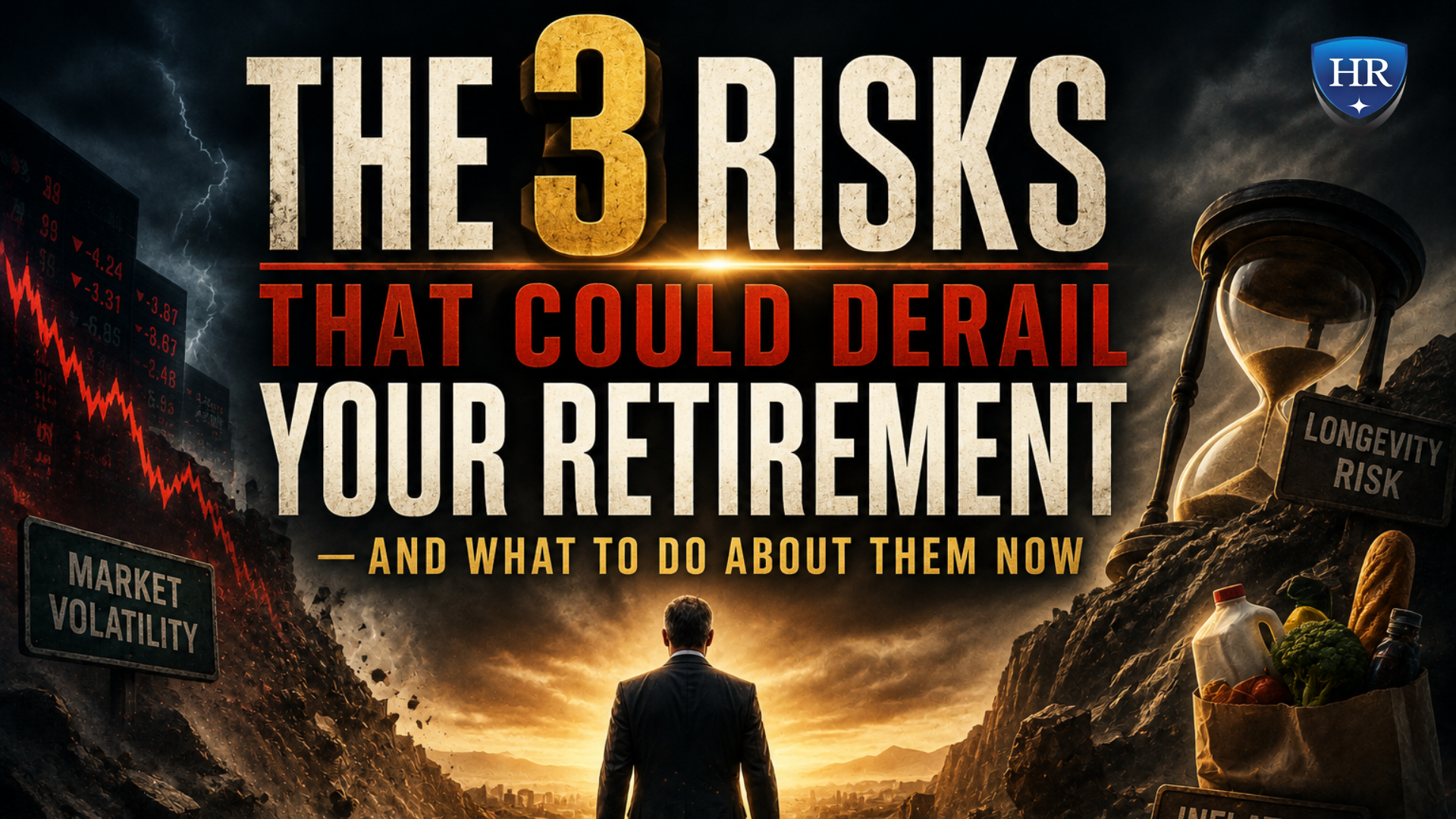
The 3 Risks That Could Derail Your Retirement And What to Do About Them Now
The 3 Risks That Could Derail Your Retirement And What to Do About Them Now
Introduction: The Clock Is Ticking, And Most People Don't Know It
Let me ask you something, honestly: when was the last time you sat down and really looked at your retirement plan? Not just glanced at your 401(k) balance or quickly scrolled past a financial newsletter, but truly, deeply looked at whether you're set up to not run out of money.
If you're in your 50s or early 60s and still grinding through a demanding career, chances are retirement feels close enough to smell but still far enough away that you keep pushing the planning conversation to "later." We get it. You're busy. You've got a business to run, a team to manage, and targets to hit. Retirement planning keeps getting bumped down the priority list.
But here's the thing nobody's telling you clearly enough: the decade before you retire is arguably the most financially dangerous stretch of your life. The decisions you make or fail to make in these next ten years will shape the quality of every single year that comes after.
This article is your wake-up call. Not a scary one. A useful one.
We're going to walk through the 3 risks that matter most in the decade before retirement, break down why each one is a bigger deal than most people realize, and give you a clear picture of what you can actually do about them. By the time you finish reading this, you'll know exactly where your blind spots are and what your next move should be.
Let's get into it.
Why the 10 Years Before Retirement Are So Critical
Most people think of retirement planning as something you do gradually over 30 or 40 years, contribute to your 401(k), let it grow, then flip the switch when you hit 65. Simple enough, right?
Not quite.
The reality is that the years closest to retirement carry disproportionate weight. Here's why: by your 50s, your portfolio is likely the largest it's ever been. That means any major loss hits harder in absolute dollar terms. A 30% market drop when you have $200,000 saved stings. The same percentage drop when you have $1.2 million saved is a completely different conversation.
On top of that, you're running out of time to recover. A 35-year-old who loses 40% of their portfolio has 30 years of earning and compounding ahead of them. A 60-year-old with the same loss? They might have five years, maybe less.
That's what financial planners call the "fragile decade," the ten years straddling your retirement date where sequence of returns, unexpected expenses, and poor planning can unravel decades of disciplined saving.
You've worked too hard to let that happen. So let's talk about what's actually threatening your retirement right now.
Risk #1: Sequence of Returns Risk The Timing Problem Nobody Warned You About
What It Is:
Sequence of returns risk sounds like financial jargon, but the concept is actually pretty intuitive once you hear it. Here it is in plain English:
It's not just about how much your investments return over time; it's about when those returns (and losses) happen.
If you retire into a strong bull market, you're in great shape. Your portfolio grows while you're withdrawing from it, and you can sustain a longer retirement. But if a major market downturn hits in the first few years of your retirement while you're making regular withdrawals, the damage can be permanent and catastrophic.
Why It Hits Harder Than You Think?
Think about it this way. Imagine two retirees with identical portfolios of $1 million, both withdrawing $50,000 per year. Retiree A experiences strong returns in their early years. Retiree B experiences a severe market crash in years one through three.
Even if both portfolios average the same annual return over 20 years, Retiree B runs out of money far sooner, sometimes more than a decade sooner. The math is brutal and unforgiving.
This risk is especially relevant right now, given market volatility and economic uncertainty. If you're within five to ten years of your target retirement date, your portfolio could be devastated by a poorly-timed recession in a way that younger investors simply don't face.
What You Can Do About It:
Shift your asset allocation gradually. As you approach retirement, slowly reducing your exposure to volatile equities in favor of more stable income-producing assets makes sense. This doesn't mean going all-cash; it means being strategic about risk.
Build a "buffer" bucket. Some advisors recommend keeping one to two years of living expenses in cash or near-cash equivalents, so you're not forced to sell equities at a loss during a downturn.
Consider annuities or guaranteed income streams. They're not for everyone, but a portion of guaranteed income can act as a floor beneath your retirement, meaning market swings don't threaten your basic needs.
Don't retire on a fixed date just because it sounds nice. If markets crash the year you planned to retire, working one or two more years can make an enormous difference to your long-term financial health.
The bottom line? Timing matters almost as much as total returns. Plan accordingly.
Risk #2: Longevity Risk The Problem of Living "Too Long"
What It Is?
Here's one nobody likes to talk about because it sounds morbid, but it's genuinely one of the biggest financial threats facing retirees today: you might live a lot longer than your money is planned for.
Longevity risk is the risk of outliving your assets. And with modern medicine, healthier lifestyles, and improving healthcare access, this is becoming more common — not less.
The numbers don't lie.
Consider this: a 65-year-old man today has roughly a 50% chance of living to age 85. A 65-year-old woman has roughly a 50% chance of living to 88. And for couples, there's about a 50% chance that at least one partner will live past 90.
Are you planning for a 25-to-30-year retirement? Most people aren't. Most people are planning for maybe 15 to 20 years, and that gap can be financially devastating.
If you retire at 62 and live to 92, you need your money to last 30 years. Through recessions. Through inflation. Through healthcare costs that escalate every year. Through the unexpected.
That's a tall order, and it's why so many retirees who seemed financially comfortable in their 60s end up struggling in their 80s.
What You Can Do About It
Plan for a longer retirement than feels comfortable. If you think you'll live to 85, plan for 95. You'd rather have money left over than run short.
Don't cash out your pension or retirement accounts too early. Every year you delay taking Social Security benefits (up to age 70) increases your monthly benefit, and that's a guaranteed inflation-adjusted income for life.
Think about income, not just assets. It's easy to look at a large retirement account and feel secure. But what matters is whether that account can generate reliable income for decades. That framing changes how you invest and draw down your savings.
Consider long-term care planning. Extended longevity often comes with healthcare needs and potential long-term care costs. Having a plan for that, whether through insurance, assets, or family planning, is essential.
Living a long, healthy life is the goal. Make sure your finances can keep up.
Risk #3: Lifestyle Inflation and Spending Drift: The Silent Killer of Retirement Plans
What It Is?
This one doesn't get nearly as much attention as market risk or longevity, but it might be the sneakiest threat of all. Lifestyle inflation, also called spending drift, is the tendency for your spending to creep upward over time, often without you noticing until it's already become your new normal.
For high-earning professionals in their 50s and 60s, this is particularly dangerous. You've worked hard for decades. You've built a great life. You've earned the house upgrades, the vacations, the nice cars, the private school tuitions. Nobody's saying you haven't. But if your retirement income plan is based on a spending level that's 20% or 30% lower than what you're actually living right now? You've got a gap, and it's going to hurt.
Why Business Professionals Are Especially Vulnerable?
Here's something worth saying directly: high earners are often worse at this than average earners. Why? Because the lifestyle adjustments required in retirement feel more dramatic. Someone earning $80,000 a year throughout their career is used to budgeting carefully. Someone earning $350,000 a year has had decades of not needing to think too hard about individual expenses.
Retirement has a way of making every expense suddenly visible. And that adjustment, psychologically and financially, can be brutal if you're not prepared.
What You Can Do About It:
Know your actual spending number. Not a rough estimate. Not what you think you spend. Get granular. Look at 12 months of bank statements and credit card bills. Many people are genuinely surprised by what they find.
Build your retirement income plan around your real lifestyle, not an idealized version. It's tempting to assume you'll spend less in retirement, but research consistently shows that early retirees often spend more, not less, at least in the first decade.
Create a realistic retirement budget now. Not when you retire. Now. Think through housing, travel, healthcare, hobbies, family support, and yes, the fun stuff. Then work backwards to figure out how much income you'll actually need.
Have honest conversations with your partner. Retirement spending is a team sport if you're part of a couple. Misaligned expectations about lifestyle can become serious financial (and relationship) problems.
A retirement plan built on faulty spending assumptions is like a house built on sand. Get the foundation right.
Putting It All Together: Your Pre-Retirement Risk Checklist
Here's a quick summary of where you should focus your energy in the next 12 months:
Review your asset allocation. Is it appropriately adjusted for someone within 10 years of retirement, or are you still holding on to a 30-year-old's aggressive portfolio?
Model your longevity scenarios. Run the numbers assuming you live to 90 or 95. Does your plan still hold up?
Audit your actual spending. Pull 12 months of real expenses and build a retirement budget that reflects reality, not wishful thinking.
Check your Social Security strategy. Have you modeled different claiming ages? The difference between claiming at 62 versus 70 can be hundreds of thousands of dollars over a lifetime.
Explore guaranteed income options. Whether that's an annuity, a pension, or maximizing Social Security, guaranteed income reduces the impact of all three risks above.
Talk to a professional. Not a product salesperson. A fiduciary advisor who is legally required to act in your interest.
Frequently Asked Questions (FAQs)
Q: I'm 58 and haven't done much planning. Is it too late?
Absolutely not, but the urgency is real. The moves you make in the next five to seven years will have an outsized impact on your retirement security. Start now. A good financial planner can help you make up ground quickly with smart decisions.
Q: How much do I actually need to retire comfortably?
The old rule of thumb, 10 to 12 times your final salary, is a starting point, not a finish line. The real answer depends on your specific lifestyle, healthcare needs, planned retirement age, and expected income from Social Security or pensions. Get a customized projection done.
Q: Should I pay off my mortgage before I retire?
This is highly personal and depends on your interest rate, tax situation, and cash flow needs. For many people, heading into retirement debt-free provides enormous psychological and financial peace of mind. But it's not a universal rule. A fiduciary advisor can help you model both options.
Q: What's the biggest mistake people make in the decade before retirement?
Honestly? Not planning at all or planning too casually. The second biggest mistake is underestimating how much they'll actually spend in retirement. Both are fixable. But only if you start now.
Q: What is a "hybrid retirement" and why does it matter?
A hybrid retirement blends traditional retirement savings (401(k), IRA, Social Security) with newer income strategies like part-time work, consulting revenue, real estate income, or business interests. For many high earners, this approach offers more flexibility, more income security, and, honestly, more purpose. It's worth exploring.
Conclusion: The Best Time to Act Is Right Now
Here's the truth about retirement planning: nobody regrets starting too early. Plenty of people regret starting too late.
The three risks we've covered, sequence of returns risk, longevity risk, and lifestyle inflation, aren't abstract financial concepts. They're real forces that will shape whether your retirement is everything you've worked for, or a stressful scramble to make the numbers work.
But here's the good news: all three are manageable if you start now. Not perfectly solvable life is never perfectly solvable. But manageable. Plannable. Survivable. Even flourishing.
You've spent decades building your career, your business, your wealth. Don't let the last mile be the one that trips you up.
Your challenge this week: Pick one of the three risk areas above that feels most relevant to your situation. Just one. Then take one concrete action, whether that's pulling your spending data, checking your asset allocation, or booking a consultation with a financial advisor. Small moves create momentum. And right now, momentum is everything.
Drop a comment below which risk resonated with you most? And what's the one action you're committing to this week? I'd genuinely love to hear it.
Ready to Take the Next Step?
🌐 Explore more retirement planning resources and strategies: Visit MyHybridRetirement.com
📅 Book a free 15-minute planning call with Rob: Schedule Your Appointment (No pressure, no pitch — just a real conversation about where you are and where you want to be.)
🎬 Watch the documentary that's changing how professionals think about retirement: Watch on YouTube

The 3 Risks That Could Derail Your Retirement And What to Do About Them Now
The 3 Risks That Could Derail Your Retirement And What to Do About Them Now
Introduction: The Clock Is Ticking, And Most People Don't Know It
Let me ask you something, honestly: when was the last time you sat down and really looked at your retirement plan? Not just glanced at your 401(k) balance or quickly scrolled past a financial newsletter, but truly, deeply looked at whether you're set up to not run out of money.
If you're in your 50s or early 60s and still grinding through a demanding career, chances are retirement feels close enough to smell but still far enough away that you keep pushing the planning conversation to "later." We get it. You're busy. You've got a business to run, a team to manage, and targets to hit. Retirement planning keeps getting bumped down the priority list.
But here's the thing nobody's telling you clearly enough: the decade before you retire is arguably the most financially dangerous stretch of your life. The decisions you make or fail to make in these next ten years will shape the quality of every single year that comes after.
This article is your wake-up call. Not a scary one. A useful one.
We're going to walk through the 3 risks that matter most in the decade before retirement, break down why each one is a bigger deal than most people realize, and give you a clear picture of what you can actually do about them. By the time you finish reading this, you'll know exactly where your blind spots are and what your next move should be.
Let's get into it.
Why the 10 Years Before Retirement Are So Critical
Most people think of retirement planning as something you do gradually over 30 or 40 years, contribute to your 401(k), let it grow, then flip the switch when you hit 65. Simple enough, right?
Not quite.
The reality is that the years closest to retirement carry disproportionate weight. Here's why: by your 50s, your portfolio is likely the largest it's ever been. That means any major loss hits harder in absolute dollar terms. A 30% market drop when you have $200,000 saved stings. The same percentage drop when you have $1.2 million saved is a completely different conversation.
On top of that, you're running out of time to recover. A 35-year-old who loses 40% of their portfolio has 30 years of earning and compounding ahead of them. A 60-year-old with the same loss? They might have five years, maybe less.
That's what financial planners call the "fragile decade," the ten years straddling your retirement date where sequence of returns, unexpected expenses, and poor planning can unravel decades of disciplined saving.
You've worked too hard to let that happen. So let's talk about what's actually threatening your retirement right now.
Risk #1: Sequence of Returns Risk The Timing Problem Nobody Warned You About
What It Is:
Sequence of returns risk sounds like financial jargon, but the concept is actually pretty intuitive once you hear it. Here it is in plain English:
It's not just about how much your investments return over time; it's about when those returns (and losses) happen.
If you retire into a strong bull market, you're in great shape. Your portfolio grows while you're withdrawing from it, and you can sustain a longer retirement. But if a major market downturn hits in the first few years of your retirement while you're making regular withdrawals, the damage can be permanent and catastrophic.
Why It Hits Harder Than You Think?
Think about it this way. Imagine two retirees with identical portfolios of $1 million, both withdrawing $50,000 per year. Retiree A experiences strong returns in their early years. Retiree B experiences a severe market crash in years one through three.
Even if both portfolios average the same annual return over 20 years, Retiree B runs out of money far sooner, sometimes more than a decade sooner. The math is brutal and unforgiving.
This risk is especially relevant right now, given market volatility and economic uncertainty. If you're within five to ten years of your target retirement date, your portfolio could be devastated by a poorly-timed recession in a way that younger investors simply don't face.
What You Can Do About It:
Shift your asset allocation gradually. As you approach retirement, slowly reducing your exposure to volatile equities in favor of more stable income-producing assets makes sense. This doesn't mean going all-cash; it means being strategic about risk.
Build a "buffer" bucket. Some advisors recommend keeping one to two years of living expenses in cash or near-cash equivalents, so you're not forced to sell equities at a loss during a downturn.
Consider annuities or guaranteed income streams. They're not for everyone, but a portion of guaranteed income can act as a floor beneath your retirement, meaning market swings don't threaten your basic needs.
Don't retire on a fixed date just because it sounds nice. If markets crash the year you planned to retire, working one or two more years can make an enormous difference to your long-term financial health.
The bottom line? Timing matters almost as much as total returns. Plan accordingly.
Risk #2: Longevity Risk The Problem of Living "Too Long"
What It Is?
Here's one nobody likes to talk about because it sounds morbid, but it's genuinely one of the biggest financial threats facing retirees today: you might live a lot longer than your money is planned for.
Longevity risk is the risk of outliving your assets. And with modern medicine, healthier lifestyles, and improving healthcare access, this is becoming more common — not less.
The numbers don't lie.
Consider this: a 65-year-old man today has roughly a 50% chance of living to age 85. A 65-year-old woman has roughly a 50% chance of living to 88. And for couples, there's about a 50% chance that at least one partner will live past 90.
Are you planning for a 25-to-30-year retirement? Most people aren't. Most people are planning for maybe 15 to 20 years, and that gap can be financially devastating.
If you retire at 62 and live to 92, you need your money to last 30 years. Through recessions. Through inflation. Through healthcare costs that escalate every year. Through the unexpected.
That's a tall order, and it's why so many retirees who seemed financially comfortable in their 60s end up struggling in their 80s.
What You Can Do About It
Plan for a longer retirement than feels comfortable. If you think you'll live to 85, plan for 95. You'd rather have money left over than run short.
Don't cash out your pension or retirement accounts too early. Every year you delay taking Social Security benefits (up to age 70) increases your monthly benefit, and that's a guaranteed inflation-adjusted income for life.
Think about income, not just assets. It's easy to look at a large retirement account and feel secure. But what matters is whether that account can generate reliable income for decades. That framing changes how you invest and draw down your savings.
Consider long-term care planning. Extended longevity often comes with healthcare needs and potential long-term care costs. Having a plan for that, whether through insurance, assets, or family planning, is essential.
Living a long, healthy life is the goal. Make sure your finances can keep up.
Risk #3: Lifestyle Inflation and Spending Drift: The Silent Killer of Retirement Plans
What It Is?
This one doesn't get nearly as much attention as market risk or longevity, but it might be the sneakiest threat of all. Lifestyle inflation, also called spending drift, is the tendency for your spending to creep upward over time, often without you noticing until it's already become your new normal.
For high-earning professionals in their 50s and 60s, this is particularly dangerous. You've worked hard for decades. You've built a great life. You've earned the house upgrades, the vacations, the nice cars, the private school tuitions. Nobody's saying you haven't. But if your retirement income plan is based on a spending level that's 20% or 30% lower than what you're actually living right now? You've got a gap, and it's going to hurt.
Why Business Professionals Are Especially Vulnerable?
Here's something worth saying directly: high earners are often worse at this than average earners. Why? Because the lifestyle adjustments required in retirement feel more dramatic. Someone earning $80,000 a year throughout their career is used to budgeting carefully. Someone earning $350,000 a year has had decades of not needing to think too hard about individual expenses.
Retirement has a way of making every expense suddenly visible. And that adjustment, psychologically and financially, can be brutal if you're not prepared.
What You Can Do About It:
Know your actual spending number. Not a rough estimate. Not what you think you spend. Get granular. Look at 12 months of bank statements and credit card bills. Many people are genuinely surprised by what they find.
Build your retirement income plan around your real lifestyle, not an idealized version. It's tempting to assume you'll spend less in retirement, but research consistently shows that early retirees often spend more, not less, at least in the first decade.
Create a realistic retirement budget now. Not when you retire. Now. Think through housing, travel, healthcare, hobbies, family support, and yes, the fun stuff. Then work backwards to figure out how much income you'll actually need.
Have honest conversations with your partner. Retirement spending is a team sport if you're part of a couple. Misaligned expectations about lifestyle can become serious financial (and relationship) problems.
A retirement plan built on faulty spending assumptions is like a house built on sand. Get the foundation right.
Putting It All Together: Your Pre-Retirement Risk Checklist
Here's a quick summary of where you should focus your energy in the next 12 months:
Review your asset allocation. Is it appropriately adjusted for someone within 10 years of retirement, or are you still holding on to a 30-year-old's aggressive portfolio?
Model your longevity scenarios. Run the numbers assuming you live to 90 or 95. Does your plan still hold up?
Audit your actual spending. Pull 12 months of real expenses and build a retirement budget that reflects reality, not wishful thinking.
Check your Social Security strategy. Have you modeled different claiming ages? The difference between claiming at 62 versus 70 can be hundreds of thousands of dollars over a lifetime.
Explore guaranteed income options. Whether that's an annuity, a pension, or maximizing Social Security, guaranteed income reduces the impact of all three risks above.
Talk to a professional. Not a product salesperson. A fiduciary advisor who is legally required to act in your interest.
Frequently Asked Questions (FAQs)
Q: I'm 58 and haven't done much planning. Is it too late?
Absolutely not, but the urgency is real. The moves you make in the next five to seven years will have an outsized impact on your retirement security. Start now. A good financial planner can help you make up ground quickly with smart decisions.
Q: How much do I actually need to retire comfortably?
The old rule of thumb, 10 to 12 times your final salary, is a starting point, not a finish line. The real answer depends on your specific lifestyle, healthcare needs, planned retirement age, and expected income from Social Security or pensions. Get a customized projection done.
Q: Should I pay off my mortgage before I retire?
This is highly personal and depends on your interest rate, tax situation, and cash flow needs. For many people, heading into retirement debt-free provides enormous psychological and financial peace of mind. But it's not a universal rule. A fiduciary advisor can help you model both options.
Q: What's the biggest mistake people make in the decade before retirement?
Honestly? Not planning at all or planning too casually. The second biggest mistake is underestimating how much they'll actually spend in retirement. Both are fixable. But only if you start now.
Q: What is a "hybrid retirement" and why does it matter?
A hybrid retirement blends traditional retirement savings (401(k), IRA, Social Security) with newer income strategies like part-time work, consulting revenue, real estate income, or business interests. For many high earners, this approach offers more flexibility, more income security, and, honestly, more purpose. It's worth exploring.
Conclusion: The Best Time to Act Is Right Now
Here's the truth about retirement planning: nobody regrets starting too early. Plenty of people regret starting too late.
The three risks we've covered, sequence of returns risk, longevity risk, and lifestyle inflation, aren't abstract financial concepts. They're real forces that will shape whether your retirement is everything you've worked for, or a stressful scramble to make the numbers work.
But here's the good news: all three are manageable if you start now. Not perfectly solvable life is never perfectly solvable. But manageable. Plannable. Survivable. Even flourishing.
You've spent decades building your career, your business, your wealth. Don't let the last mile be the one that trips you up.
Your challenge this week: Pick one of the three risk areas above that feels most relevant to your situation. Just one. Then take one concrete action, whether that's pulling your spending data, checking your asset allocation, or booking a consultation with a financial advisor. Small moves create momentum. And right now, momentum is everything.
Drop a comment below which risk resonated with you most? And what's the one action you're committing to this week? I'd genuinely love to hear it.
Ready to Take the Next Step?
🌐 Explore more retirement planning resources and strategies: Visit MyHybridRetirement.com
📅 Book a free 15-minute planning call with Rob: Schedule Your Appointment (No pressure, no pitch — just a real conversation about where you are and where you want to be.)
🎬 Watch the documentary that's changing how professionals think about retirement: Watch on YouTube
The 3 Risks That Could Derail Your Retirement And What to Do About Them Now
The 3 Risks That Could Derail Your Retirement And What to Do About Them Now
Introduction: The Clock Is Ticking, And Most People Don't Know It
Let me ask you something, honestly: when was the last time you sat down and really looked at your retirement plan? Not just glanced at your 401(k) balance or quickly scrolled past a financial newsletter, but truly, deeply looked at whether you're set up to not run out of money.
If you're in your 50s or early 60s and still grinding through a demanding career, chances are retirement feels close enough to smell but still far enough away that you keep pushing the planning conversation to "later." We get it. You're busy. You've got a business to run, a team to manage, and targets to hit. Retirement planning keeps getting bumped down the priority list.
But here's the thing nobody's telling you clearly enough: the decade before you retire is arguably the most financially dangerous stretch of your life. The decisions you make or fail to make in these next ten years will shape the quality of every single year that comes after.
This article is your wake-up call. Not a scary one. A useful one.
We're going to walk through the 3 risks that matter most in the decade before retirement, break down why each one is a bigger deal than most people realize, and give you a clear picture of what you can actually do about them. By the time you finish reading this, you'll know exactly where your blind spots are and what your next move should be.
Let's get into it.
Why the 10 Years Before Retirement Are So Critical
Most people think of retirement planning as something you do gradually over 30 or 40 years, contribute to your 401(k), let it grow, then flip the switch when you hit 65. Simple enough, right?
Not quite.
The reality is that the years closest to retirement carry disproportionate weight. Here's why: by your 50s, your portfolio is likely the largest it's ever been. That means any major loss hits harder in absolute dollar terms. A 30% market drop when you have $200,000 saved stings. The same percentage drop when you have $1.2 million saved is a completely different conversation.
On top of that, you're running out of time to recover. A 35-year-old who loses 40% of their portfolio has 30 years of earning and compounding ahead of them. A 60-year-old with the same loss? They might have five years, maybe less.
That's what financial planners call the "fragile decade," the ten years straddling your retirement date where sequence of returns, unexpected expenses, and poor planning can unravel decades of disciplined saving.
You've worked too hard to let that happen. So let's talk about what's actually threatening your retirement right now.
Risk #1: Sequence of Returns Risk The Timing Problem Nobody Warned You About
What It Is:
Sequence of returns risk sounds like financial jargon, but the concept is actually pretty intuitive once you hear it. Here it is in plain English:
It's not just about how much your investments return over time; it's about when those returns (and losses) happen.
If you retire into a strong bull market, you're in great shape. Your portfolio grows while you're withdrawing from it, and you can sustain a longer retirement. But if a major market downturn hits in the first few years of your retirement while you're making regular withdrawals, the damage can be permanent and catastrophic.
Why It Hits Harder Than You Think?
Think about it this way. Imagine two retirees with identical portfolios of $1 million, both withdrawing $50,000 per year. Retiree A experiences strong returns in their early years. Retiree B experiences a severe market crash in years one through three.
Even if both portfolios average the same annual return over 20 years, Retiree B runs out of money far sooner, sometimes more than a decade sooner. The math is brutal and unforgiving.
This risk is especially relevant right now, given market volatility and economic uncertainty. If you're within five to ten years of your target retirement date, your portfolio could be devastated by a poorly-timed recession in a way that younger investors simply don't face.
What You Can Do About It:
Shift your asset allocation gradually. As you approach retirement, slowly reducing your exposure to volatile equities in favor of more stable income-producing assets makes sense. This doesn't mean going all-cash; it means being strategic about risk.
Build a "buffer" bucket. Some advisors recommend keeping one to two years of living expenses in cash or near-cash equivalents, so you're not forced to sell equities at a loss during a downturn.
Consider annuities or guaranteed income streams. They're not for everyone, but a portion of guaranteed income can act as a floor beneath your retirement, meaning market swings don't threaten your basic needs.
Don't retire on a fixed date just because it sounds nice. If markets crash the year you planned to retire, working one or two more years can make an enormous difference to your long-term financial health.
The bottom line? Timing matters almost as much as total returns. Plan accordingly.
Risk #2: Longevity Risk The Problem of Living "Too Long"
What It Is?
Here's one nobody likes to talk about because it sounds morbid, but it's genuinely one of the biggest financial threats facing retirees today: you might live a lot longer than your money is planned for.
Longevity risk is the risk of outliving your assets. And with modern medicine, healthier lifestyles, and improving healthcare access, this is becoming more common — not less.
The numbers don't lie.
Consider this: a 65-year-old man today has roughly a 50% chance of living to age 85. A 65-year-old woman has roughly a 50% chance of living to 88. And for couples, there's about a 50% chance that at least one partner will live past 90.
Are you planning for a 25-to-30-year retirement? Most people aren't. Most people are planning for maybe 15 to 20 years, and that gap can be financially devastating.
If you retire at 62 and live to 92, you need your money to last 30 years. Through recessions. Through inflation. Through healthcare costs that escalate every year. Through the unexpected.
That's a tall order, and it's why so many retirees who seemed financially comfortable in their 60s end up struggling in their 80s.
What You Can Do About It
Plan for a longer retirement than feels comfortable. If you think you'll live to 85, plan for 95. You'd rather have money left over than run short.
Don't cash out your pension or retirement accounts too early. Every year you delay taking Social Security benefits (up to age 70) increases your monthly benefit, and that's a guaranteed inflation-adjusted income for life.
Think about income, not just assets. It's easy to look at a large retirement account and feel secure. But what matters is whether that account can generate reliable income for decades. That framing changes how you invest and draw down your savings.
Consider long-term care planning. Extended longevity often comes with healthcare needs and potential long-term care costs. Having a plan for that, whether through insurance, assets, or family planning, is essential.
Living a long, healthy life is the goal. Make sure your finances can keep up.
Risk #3: Lifestyle Inflation and Spending Drift: The Silent Killer of Retirement Plans
What It Is?
This one doesn't get nearly as much attention as market risk or longevity, but it might be the sneakiest threat of all. Lifestyle inflation, also called spending drift, is the tendency for your spending to creep upward over time, often without you noticing until it's already become your new normal.
For high-earning professionals in their 50s and 60s, this is particularly dangerous. You've worked hard for decades. You've built a great life. You've earned the house upgrades, the vacations, the nice cars, the private school tuitions. Nobody's saying you haven't. But if your retirement income plan is based on a spending level that's 20% or 30% lower than what you're actually living right now? You've got a gap, and it's going to hurt.
Why Business Professionals Are Especially Vulnerable?
Here's something worth saying directly: high earners are often worse at this than average earners. Why? Because the lifestyle adjustments required in retirement feel more dramatic. Someone earning $80,000 a year throughout their career is used to budgeting carefully. Someone earning $350,000 a year has had decades of not needing to think too hard about individual expenses.
Retirement has a way of making every expense suddenly visible. And that adjustment, psychologically and financially, can be brutal if you're not prepared.
What You Can Do About It:
Know your actual spending number. Not a rough estimate. Not what you think you spend. Get granular. Look at 12 months of bank statements and credit card bills. Many people are genuinely surprised by what they find.
Build your retirement income plan around your real lifestyle, not an idealized version. It's tempting to assume you'll spend less in retirement, but research consistently shows that early retirees often spend more, not less, at least in the first decade.
Create a realistic retirement budget now. Not when you retire. Now. Think through housing, travel, healthcare, hobbies, family support, and yes, the fun stuff. Then work backwards to figure out how much income you'll actually need.
Have honest conversations with your partner. Retirement spending is a team sport if you're part of a couple. Misaligned expectations about lifestyle can become serious financial (and relationship) problems.
A retirement plan built on faulty spending assumptions is like a house built on sand. Get the foundation right.
Putting It All Together: Your Pre-Retirement Risk Checklist
Here's a quick summary of where you should focus your energy in the next 12 months:
Review your asset allocation. Is it appropriately adjusted for someone within 10 years of retirement, or are you still holding on to a 30-year-old's aggressive portfolio?
Model your longevity scenarios. Run the numbers assuming you live to 90 or 95. Does your plan still hold up?
Audit your actual spending. Pull 12 months of real expenses and build a retirement budget that reflects reality, not wishful thinking.
Check your Social Security strategy. Have you modeled different claiming ages? The difference between claiming at 62 versus 70 can be hundreds of thousands of dollars over a lifetime.
Explore guaranteed income options. Whether that's an annuity, a pension, or maximizing Social Security, guaranteed income reduces the impact of all three risks above.
Talk to a professional. Not a product salesperson. A fiduciary advisor who is legally required to act in your interest.
Frequently Asked Questions (FAQs)
Q: I'm 58 and haven't done much planning. Is it too late?
Absolutely not, but the urgency is real. The moves you make in the next five to seven years will have an outsized impact on your retirement security. Start now. A good financial planner can help you make up ground quickly with smart decisions.
Q: How much do I actually need to retire comfortably?
The old rule of thumb, 10 to 12 times your final salary, is a starting point, not a finish line. The real answer depends on your specific lifestyle, healthcare needs, planned retirement age, and expected income from Social Security or pensions. Get a customized projection done.
Q: Should I pay off my mortgage before I retire?
This is highly personal and depends on your interest rate, tax situation, and cash flow needs. For many people, heading into retirement debt-free provides enormous psychological and financial peace of mind. But it's not a universal rule. A fiduciary advisor can help you model both options.
Q: What's the biggest mistake people make in the decade before retirement?
Honestly? Not planning at all or planning too casually. The second biggest mistake is underestimating how much they'll actually spend in retirement. Both are fixable. But only if you start now.
Q: What is a "hybrid retirement" and why does it matter?
A hybrid retirement blends traditional retirement savings (401(k), IRA, Social Security) with newer income strategies like part-time work, consulting revenue, real estate income, or business interests. For many high earners, this approach offers more flexibility, more income security, and, honestly, more purpose. It's worth exploring.
Conclusion: The Best Time to Act Is Right Now
Here's the truth about retirement planning: nobody regrets starting too early. Plenty of people regret starting too late.
The three risks we've covered, sequence of returns risk, longevity risk, and lifestyle inflation, aren't abstract financial concepts. They're real forces that will shape whether your retirement is everything you've worked for, or a stressful scramble to make the numbers work.
But here's the good news: all three are manageable if you start now. Not perfectly solvable life is never perfectly solvable. But manageable. Plannable. Survivable. Even flourishing.
You've spent decades building your career, your business, your wealth. Don't let the last mile be the one that trips you up.
Your challenge this week: Pick one of the three risk areas above that feels most relevant to your situation. Just one. Then take one concrete action, whether that's pulling your spending data, checking your asset allocation, or booking a consultation with a financial advisor. Small moves create momentum. And right now, momentum is everything.
Drop a comment below which risk resonated with you most? And what's the one action you're committing to this week? I'd genuinely love to hear it.
Ready to Take the Next Step?
🌐 Explore more retirement planning resources and strategies: Visit MyHybridRetirement.com
📅 Book a free 15-minute planning call with Rob: Schedule Your Appointment (No pressure, no pitch — just a real conversation about where you are and where you want to be.)
🎬 Watch the documentary that's changing how professionals think about retirement: Watch on YouTube
The 3 Risks That Could Derail Your Retirement And What to Do About Them Now
The 3 Risks That Could Derail Your Retirement And What to Do About Them Now
Introduction: The Clock Is Ticking, And Most People Don't Know It
Let me ask you something, honestly: when was the last time you sat down and really looked at your retirement plan? Not just glanced at your 401(k) balance or quickly scrolled past a financial newsletter, but truly, deeply looked at whether you're set up to not run out of money.
If you're in your 50s or early 60s and still grinding through a demanding career, chances are retirement feels close enough to smell but still far enough away that you keep pushing the planning conversation to "later." We get it. You're busy. You've got a business to run, a team to manage, and targets to hit. Retirement planning keeps getting bumped down the priority list.
But here's the thing nobody's telling you clearly enough: the decade before you retire is arguably the most financially dangerous stretch of your life. The decisions you make or fail to make in these next ten years will shape the quality of every single year that comes after.
This article is your wake-up call. Not a scary one. A useful one.
We're going to walk through the 3 risks that matter most in the decade before retirement, break down why each one is a bigger deal than most people realize, and give you a clear picture of what you can actually do about them. By the time you finish reading this, you'll know exactly where your blind spots are and what your next move should be.
Let's get into it.
Why the 10 Years Before Retirement Are So Critical
Most people think of retirement planning as something you do gradually over 30 or 40 years, contribute to your 401(k), let it grow, then flip the switch when you hit 65. Simple enough, right?
Not quite.
The reality is that the years closest to retirement carry disproportionate weight. Here's why: by your 50s, your portfolio is likely the largest it's ever been. That means any major loss hits harder in absolute dollar terms. A 30% market drop when you have $200,000 saved stings. The same percentage drop when you have $1.2 million saved is a completely different conversation.
On top of that, you're running out of time to recover. A 35-year-old who loses 40% of their portfolio has 30 years of earning and compounding ahead of them. A 60-year-old with the same loss? They might have five years, maybe less.
That's what financial planners call the "fragile decade," the ten years straddling your retirement date where sequence of returns, unexpected expenses, and poor planning can unravel decades of disciplined saving.
You've worked too hard to let that happen. So let's talk about what's actually threatening your retirement right now.
Risk #1: Sequence of Returns Risk The Timing Problem Nobody Warned You About
What It Is:
Sequence of returns risk sounds like financial jargon, but the concept is actually pretty intuitive once you hear it. Here it is in plain English:
It's not just about how much your investments return over time; it's about when those returns (and losses) happen.
If you retire into a strong bull market, you're in great shape. Your portfolio grows while you're withdrawing from it, and you can sustain a longer retirement. But if a major market downturn hits in the first few years of your retirement while you're making regular withdrawals, the damage can be permanent and catastrophic.
Why It Hits Harder Than You Think?
Think about it this way. Imagine two retirees with identical portfolios of $1 million, both withdrawing $50,000 per year. Retiree A experiences strong returns in their early years. Retiree B experiences a severe market crash in years one through three.
Even if both portfolios average the same annual return over 20 years, Retiree B runs out of money far sooner, sometimes more than a decade sooner. The math is brutal and unforgiving.
This risk is especially relevant right now, given market volatility and economic uncertainty. If you're within five to ten years of your target retirement date, your portfolio could be devastated by a poorly-timed recession in a way that younger investors simply don't face.
What You Can Do About It:
Shift your asset allocation gradually. As you approach retirement, slowly reducing your exposure to volatile equities in favor of more stable income-producing assets makes sense. This doesn't mean going all-cash; it means being strategic about risk.
Build a "buffer" bucket. Some advisors recommend keeping one to two years of living expenses in cash or near-cash equivalents, so you're not forced to sell equities at a loss during a downturn.
Consider annuities or guaranteed income streams. They're not for everyone, but a portion of guaranteed income can act as a floor beneath your retirement, meaning market swings don't threaten your basic needs.
Don't retire on a fixed date just because it sounds nice. If markets crash the year you planned to retire, working one or two more years can make an enormous difference to your long-term financial health.
The bottom line? Timing matters almost as much as total returns. Plan accordingly.
Risk #2: Longevity Risk The Problem of Living "Too Long"
What It Is?
Here's one nobody likes to talk about because it sounds morbid, but it's genuinely one of the biggest financial threats facing retirees today: you might live a lot longer than your money is planned for.
Longevity risk is the risk of outliving your assets. And with modern medicine, healthier lifestyles, and improving healthcare access, this is becoming more common — not less.
The numbers don't lie.
Consider this: a 65-year-old man today has roughly a 50% chance of living to age 85. A 65-year-old woman has roughly a 50% chance of living to 88. And for couples, there's about a 50% chance that at least one partner will live past 90.
Are you planning for a 25-to-30-year retirement? Most people aren't. Most people are planning for maybe 15 to 20 years, and that gap can be financially devastating.
If you retire at 62 and live to 92, you need your money to last 30 years. Through recessions. Through inflation. Through healthcare costs that escalate every year. Through the unexpected.
That's a tall order, and it's why so many retirees who seemed financially comfortable in their 60s end up struggling in their 80s.
What You Can Do About It
Plan for a longer retirement than feels comfortable. If you think you'll live to 85, plan for 95. You'd rather have money left over than run short.
Don't cash out your pension or retirement accounts too early. Every year you delay taking Social Security benefits (up to age 70) increases your monthly benefit, and that's a guaranteed inflation-adjusted income for life.
Think about income, not just assets. It's easy to look at a large retirement account and feel secure. But what matters is whether that account can generate reliable income for decades. That framing changes how you invest and draw down your savings.
Consider long-term care planning. Extended longevity often comes with healthcare needs and potential long-term care costs. Having a plan for that, whether through insurance, assets, or family planning, is essential.
Living a long, healthy life is the goal. Make sure your finances can keep up.
Risk #3: Lifestyle Inflation and Spending Drift: The Silent Killer of Retirement Plans
What It Is?
This one doesn't get nearly as much attention as market risk or longevity, but it might be the sneakiest threat of all. Lifestyle inflation, also called spending drift, is the tendency for your spending to creep upward over time, often without you noticing until it's already become your new normal.
For high-earning professionals in their 50s and 60s, this is particularly dangerous. You've worked hard for decades. You've built a great life. You've earned the house upgrades, the vacations, the nice cars, the private school tuitions. Nobody's saying you haven't. But if your retirement income plan is based on a spending level that's 20% or 30% lower than what you're actually living right now? You've got a gap, and it's going to hurt.
Why Business Professionals Are Especially Vulnerable?
Here's something worth saying directly: high earners are often worse at this than average earners. Why? Because the lifestyle adjustments required in retirement feel more dramatic. Someone earning $80,000 a year throughout their career is used to budgeting carefully. Someone earning $350,000 a year has had decades of not needing to think too hard about individual expenses.
Retirement has a way of making every expense suddenly visible. And that adjustment, psychologically and financially, can be brutal if you're not prepared.
What You Can Do About It:
Know your actual spending number. Not a rough estimate. Not what you think you spend. Get granular. Look at 12 months of bank statements and credit card bills. Many people are genuinely surprised by what they find.
Build your retirement income plan around your real lifestyle, not an idealized version. It's tempting to assume you'll spend less in retirement, but research consistently shows that early retirees often spend more, not less, at least in the first decade.
Create a realistic retirement budget now. Not when you retire. Now. Think through housing, travel, healthcare, hobbies, family support, and yes, the fun stuff. Then work backwards to figure out how much income you'll actually need.
Have honest conversations with your partner. Retirement spending is a team sport if you're part of a couple. Misaligned expectations about lifestyle can become serious financial (and relationship) problems.
A retirement plan built on faulty spending assumptions is like a house built on sand. Get the foundation right.
Putting It All Together: Your Pre-Retirement Risk Checklist
Here's a quick summary of where you should focus your energy in the next 12 months:
Review your asset allocation. Is it appropriately adjusted for someone within 10 years of retirement, or are you still holding on to a 30-year-old's aggressive portfolio?
Model your longevity scenarios. Run the numbers assuming you live to 90 or 95. Does your plan still hold up?
Audit your actual spending. Pull 12 months of real expenses and build a retirement budget that reflects reality, not wishful thinking.
Check your Social Security strategy. Have you modeled different claiming ages? The difference between claiming at 62 versus 70 can be hundreds of thousands of dollars over a lifetime.
Explore guaranteed income options. Whether that's an annuity, a pension, or maximizing Social Security, guaranteed income reduces the impact of all three risks above.
Talk to a professional. Not a product salesperson. A fiduciary advisor who is legally required to act in your interest.
Frequently Asked Questions (FAQs)
Q: I'm 58 and haven't done much planning. Is it too late?
Absolutely not, but the urgency is real. The moves you make in the next five to seven years will have an outsized impact on your retirement security. Start now. A good financial planner can help you make up ground quickly with smart decisions.
Q: How much do I actually need to retire comfortably?
The old rule of thumb, 10 to 12 times your final salary, is a starting point, not a finish line. The real answer depends on your specific lifestyle, healthcare needs, planned retirement age, and expected income from Social Security or pensions. Get a customized projection done.
Q: Should I pay off my mortgage before I retire?
This is highly personal and depends on your interest rate, tax situation, and cash flow needs. For many people, heading into retirement debt-free provides enormous psychological and financial peace of mind. But it's not a universal rule. A fiduciary advisor can help you model both options.
Q: What's the biggest mistake people make in the decade before retirement?
Honestly? Not planning at all or planning too casually. The second biggest mistake is underestimating how much they'll actually spend in retirement. Both are fixable. But only if you start now.
Q: What is a "hybrid retirement" and why does it matter?
A hybrid retirement blends traditional retirement savings (401(k), IRA, Social Security) with newer income strategies like part-time work, consulting revenue, real estate income, or business interests. For many high earners, this approach offers more flexibility, more income security, and, honestly, more purpose. It's worth exploring.
Conclusion: The Best Time to Act Is Right Now
Here's the truth about retirement planning: nobody regrets starting too early. Plenty of people regret starting too late.
The three risks we've covered, sequence of returns risk, longevity risk, and lifestyle inflation, aren't abstract financial concepts. They're real forces that will shape whether your retirement is everything you've worked for, or a stressful scramble to make the numbers work.
But here's the good news: all three are manageable if you start now. Not perfectly solvable life is never perfectly solvable. But manageable. Plannable. Survivable. Even flourishing.
You've spent decades building your career, your business, your wealth. Don't let the last mile be the one that trips you up.
Your challenge this week: Pick one of the three risk areas above that feels most relevant to your situation. Just one. Then take one concrete action, whether that's pulling your spending data, checking your asset allocation, or booking a consultation with a financial advisor. Small moves create momentum. And right now, momentum is everything.
Drop a comment below which risk resonated with you most? And what's the one action you're committing to this week? I'd genuinely love to hear it.
Ready to Take the Next Step?
🌐 Explore more retirement planning resources and strategies: Visit MyHybridRetirement.com
📅 Book a free 15-minute planning call with Rob: Schedule Your Appointment (No pressure, no pitch — just a real conversation about where you are and where you want to be.)
🎬 Watch the documentary that's changing how professionals think about retirement: Watch on YouTube
Connect with me today!

4 Corporate Drive, Suite 482 Shelton, CT 06484
Blog
Access expert guidance, comprehensive analysis, and actionable steps to safeguard your wealth.
The 3 Risks That Could Derail Your Retirement And What to Do About Them Now
The 3 Risks That Could Derail Your Retirement And What to Do About Them Now
Introduction: The Clock Is Ticking, And Most People Don't Know It
Let me ask you something, honestly: when was the last time you sat down and really looked at your retirement plan? Not just glanced at your 401(k) balance or quickly scrolled past a financial newsletter, but truly, deeply looked at whether you're set up to not run out of money.
If you're in your 50s or early 60s and still grinding through a demanding career, chances are retirement feels close enough to smell but still far enough away that you keep pushing the planning conversation to "later." We get it. You're busy. You've got a business to run, a team to manage, and targets to hit. Retirement planning keeps getting bumped down the priority list.
But here's the thing nobody's telling you clearly enough: the decade before you retire is arguably the most financially dangerous stretch of your life. The decisions you make or fail to make in these next ten years will shape the quality of every single year that comes after.
This article is your wake-up call. Not a scary one. A useful one.
We're going to walk through the 3 risks that matter most in the decade before retirement, break down why each one is a bigger deal than most people realize, and give you a clear picture of what you can actually do about them. By the time you finish reading this, you'll know exactly where your blind spots are and what your next move should be.
Let's get into it.
Why the 10 Years Before Retirement Are So Critical
Most people think of retirement planning as something you do gradually over 30 or 40 years, contribute to your 401(k), let it grow, then flip the switch when you hit 65. Simple enough, right?
Not quite.
The reality is that the years closest to retirement carry disproportionate weight. Here's why: by your 50s, your portfolio is likely the largest it's ever been. That means any major loss hits harder in absolute dollar terms. A 30% market drop when you have $200,000 saved stings. The same percentage drop when you have $1.2 million saved is a completely different conversation.
On top of that, you're running out of time to recover. A 35-year-old who loses 40% of their portfolio has 30 years of earning and compounding ahead of them. A 60-year-old with the same loss? They might have five years, maybe less.
That's what financial planners call the "fragile decade," the ten years straddling your retirement date where sequence of returns, unexpected expenses, and poor planning can unravel decades of disciplined saving.
You've worked too hard to let that happen. So let's talk about what's actually threatening your retirement right now.
Risk #1: Sequence of Returns Risk The Timing Problem Nobody Warned You About
What It Is:
Sequence of returns risk sounds like financial jargon, but the concept is actually pretty intuitive once you hear it. Here it is in plain English:
It's not just about how much your investments return over time; it's about when those returns (and losses) happen.
If you retire into a strong bull market, you're in great shape. Your portfolio grows while you're withdrawing from it, and you can sustain a longer retirement. But if a major market downturn hits in the first few years of your retirement while you're making regular withdrawals, the damage can be permanent and catastrophic.
Why It Hits Harder Than You Think?
Think about it this way. Imagine two retirees with identical portfolios of $1 million, both withdrawing $50,000 per year. Retiree A experiences strong returns in their early years. Retiree B experiences a severe market crash in years one through three.
Even if both portfolios average the same annual return over 20 years, Retiree B runs out of money far sooner, sometimes more than a decade sooner. The math is brutal and unforgiving.
This risk is especially relevant right now, given market volatility and economic uncertainty. If you're within five to ten years of your target retirement date, your portfolio could be devastated by a poorly-timed recession in a way that younger investors simply don't face.
What You Can Do About It:
Shift your asset allocation gradually. As you approach retirement, slowly reducing your exposure to volatile equities in favor of more stable income-producing assets makes sense. This doesn't mean going all-cash; it means being strategic about risk.
Build a "buffer" bucket. Some advisors recommend keeping one to two years of living expenses in cash or near-cash equivalents, so you're not forced to sell equities at a loss during a downturn.
Consider annuities or guaranteed income streams. They're not for everyone, but a portion of guaranteed income can act as a floor beneath your retirement, meaning market swings don't threaten your basic needs.
Don't retire on a fixed date just because it sounds nice. If markets crash the year you planned to retire, working one or two more years can make an enormous difference to your long-term financial health.
The bottom line? Timing matters almost as much as total returns. Plan accordingly.
Risk #2: Longevity Risk The Problem of Living "Too Long"
What It Is?
Here's one nobody likes to talk about because it sounds morbid, but it's genuinely one of the biggest financial threats facing retirees today: you might live a lot longer than your money is planned for.
Longevity risk is the risk of outliving your assets. And with modern medicine, healthier lifestyles, and improving healthcare access, this is becoming more common — not less.
The numbers don't lie.
Consider this: a 65-year-old man today has roughly a 50% chance of living to age 85. A 65-year-old woman has roughly a 50% chance of living to 88. And for couples, there's about a 50% chance that at least one partner will live past 90.
Are you planning for a 25-to-30-year retirement? Most people aren't. Most people are planning for maybe 15 to 20 years, and that gap can be financially devastating.
If you retire at 62 and live to 92, you need your money to last 30 years. Through recessions. Through inflation. Through healthcare costs that escalate every year. Through the unexpected.
That's a tall order, and it's why so many retirees who seemed financially comfortable in their 60s end up struggling in their 80s.
What You Can Do About It
Plan for a longer retirement than feels comfortable. If you think you'll live to 85, plan for 95. You'd rather have money left over than run short.
Don't cash out your pension or retirement accounts too early. Every year you delay taking Social Security benefits (up to age 70) increases your monthly benefit, and that's a guaranteed inflation-adjusted income for life.
Think about income, not just assets. It's easy to look at a large retirement account and feel secure. But what matters is whether that account can generate reliable income for decades. That framing changes how you invest and draw down your savings.
Consider long-term care planning. Extended longevity often comes with healthcare needs and potential long-term care costs. Having a plan for that, whether through insurance, assets, or family planning, is essential.
Living a long, healthy life is the goal. Make sure your finances can keep up.
Risk #3: Lifestyle Inflation and Spending Drift: The Silent Killer of Retirement Plans
What It Is?
This one doesn't get nearly as much attention as market risk or longevity, but it might be the sneakiest threat of all. Lifestyle inflation, also called spending drift, is the tendency for your spending to creep upward over time, often without you noticing until it's already become your new normal.
For high-earning professionals in their 50s and 60s, this is particularly dangerous. You've worked hard for decades. You've built a great life. You've earned the house upgrades, the vacations, the nice cars, the private school tuitions. Nobody's saying you haven't. But if your retirement income plan is based on a spending level that's 20% or 30% lower than what you're actually living right now? You've got a gap, and it's going to hurt.
Why Business Professionals Are Especially Vulnerable?
Here's something worth saying directly: high earners are often worse at this than average earners. Why? Because the lifestyle adjustments required in retirement feel more dramatic. Someone earning $80,000 a year throughout their career is used to budgeting carefully. Someone earning $350,000 a year has had decades of not needing to think too hard about individual expenses.
Retirement has a way of making every expense suddenly visible. And that adjustment, psychologically and financially, can be brutal if you're not prepared.
What You Can Do About It:
Know your actual spending number. Not a rough estimate. Not what you think you spend. Get granular. Look at 12 months of bank statements and credit card bills. Many people are genuinely surprised by what they find.
Build your retirement income plan around your real lifestyle, not an idealized version. It's tempting to assume you'll spend less in retirement, but research consistently shows that early retirees often spend more, not less, at least in the first decade.
Create a realistic retirement budget now. Not when you retire. Now. Think through housing, travel, healthcare, hobbies, family support, and yes, the fun stuff. Then work backwards to figure out how much income you'll actually need.
Have honest conversations with your partner. Retirement spending is a team sport if you're part of a couple. Misaligned expectations about lifestyle can become serious financial (and relationship) problems.
A retirement plan built on faulty spending assumptions is like a house built on sand. Get the foundation right.
Putting It All Together: Your Pre-Retirement Risk Checklist
Here's a quick summary of where you should focus your energy in the next 12 months:
Review your asset allocation. Is it appropriately adjusted for someone within 10 years of retirement, or are you still holding on to a 30-year-old's aggressive portfolio?
Model your longevity scenarios. Run the numbers assuming you live to 90 or 95. Does your plan still hold up?
Audit your actual spending. Pull 12 months of real expenses and build a retirement budget that reflects reality, not wishful thinking.
Check your Social Security strategy. Have you modeled different claiming ages? The difference between claiming at 62 versus 70 can be hundreds of thousands of dollars over a lifetime.
Explore guaranteed income options. Whether that's an annuity, a pension, or maximizing Social Security, guaranteed income reduces the impact of all three risks above.
Talk to a professional. Not a product salesperson. A fiduciary advisor who is legally required to act in your interest.
Frequently Asked Questions (FAQs)
Q: I'm 58 and haven't done much planning. Is it too late?
Absolutely not, but the urgency is real. The moves you make in the next five to seven years will have an outsized impact on your retirement security. Start now. A good financial planner can help you make up ground quickly with smart decisions.
Q: How much do I actually need to retire comfortably?
The old rule of thumb, 10 to 12 times your final salary, is a starting point, not a finish line. The real answer depends on your specific lifestyle, healthcare needs, planned retirement age, and expected income from Social Security or pensions. Get a customized projection done.
Q: Should I pay off my mortgage before I retire?
This is highly personal and depends on your interest rate, tax situation, and cash flow needs. For many people, heading into retirement debt-free provides enormous psychological and financial peace of mind. But it's not a universal rule. A fiduciary advisor can help you model both options.
Q: What's the biggest mistake people make in the decade before retirement?
Honestly? Not planning at all or planning too casually. The second biggest mistake is underestimating how much they'll actually spend in retirement. Both are fixable. But only if you start now.
Q: What is a "hybrid retirement" and why does it matter?
A hybrid retirement blends traditional retirement savings (401(k), IRA, Social Security) with newer income strategies like part-time work, consulting revenue, real estate income, or business interests. For many high earners, this approach offers more flexibility, more income security, and, honestly, more purpose. It's worth exploring.
Conclusion: The Best Time to Act Is Right Now
Here's the truth about retirement planning: nobody regrets starting too early. Plenty of people regret starting too late.
The three risks we've covered, sequence of returns risk, longevity risk, and lifestyle inflation, aren't abstract financial concepts. They're real forces that will shape whether your retirement is everything you've worked for, or a stressful scramble to make the numbers work.
But here's the good news: all three are manageable if you start now. Not perfectly solvable life is never perfectly solvable. But manageable. Plannable. Survivable. Even flourishing.
You've spent decades building your career, your business, your wealth. Don't let the last mile be the one that trips you up.
Your challenge this week: Pick one of the three risk areas above that feels most relevant to your situation. Just one. Then take one concrete action, whether that's pulling your spending data, checking your asset allocation, or booking a consultation with a financial advisor. Small moves create momentum. And right now, momentum is everything.
Drop a comment below which risk resonated with you most? And what's the one action you're committing to this week? I'd genuinely love to hear it.
Ready to Take the Next Step?
🌐 Explore more retirement planning resources and strategies: Visit MyHybridRetirement.com
📅 Book a free 15-minute planning call with Rob: Schedule Your Appointment (No pressure, no pitch — just a real conversation about where you are and where you want to be.)
🎬 Watch the documentary that's changing how professionals think about retirement: Watch on YouTube
My Weekly Broadcasts
Your go-to for expert strategies on maximizing retirement income and minimizing tax burdens.
DISCLAIMER:
The content is developed from sources believed to be providing accurate information. This material is not intended as investment, tax, or legal advice, it is for educational and informational purposes only. Please consult legal, investment, or tax professionals for specific information regarding your individual situation. Please visit rbcapitalmanagement.com for all information and disclosures relating to investment advisory services. Investment advice is not offered or solicited through this website. This material was developed and produced by Rob Leiphart, CFP® to provide information and education on topics that may be of interest to you.